
By Michele Evans / NYweeklyRecord.com / Date: 7/14/2026
Category: Education / Government Accountability / Public Spending
NEW YORK CITY, NY –
A showdown over public records at the nation’s largest school system is moving toward a subpoena deadline.
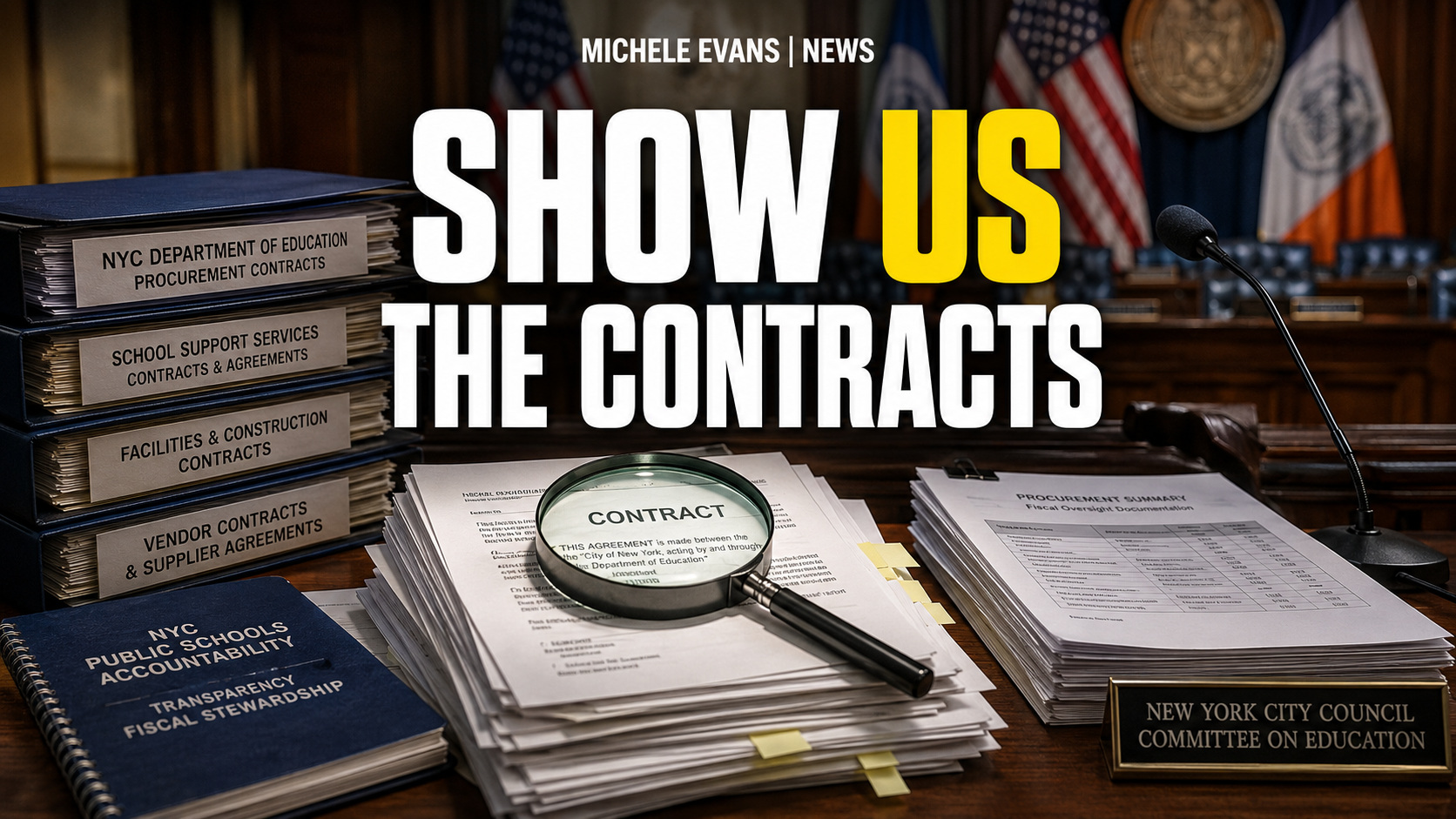
New York City Council Speaker Julie Menin has accused the Department of Education of months of “opacity, slow-walking, and delay” after the agency failed to provide access to 579 contracts requested for a Council audit. The records cover services that affect students directly and procurement decisions that determine how billions of public dollars are spent.
The disputed set includes 227 contracts related to mandated programming, including related services, assistive technology, and interpretation and transcription services. Another 352 were identified by DOE itself as not competitively bid, according to Menin’s July 9 letter to Schools Chancellor Kamar Samuels.
That distinction matters. The 579 contracts are the records under review. The often-cited $12.9 billion figure describes DOE’s broader annual spending on outside contracts, not the value of 579 contracts proven to be improper and not a finding that every dollar was awarded without competition.
The City Council’s Fiscal 2027 preliminary budget report puts DOE’s total contract budget at approximately $12.87 billion across 6,301 contracts. That is an enormous slice of a proposed $38.03 billion education budget, covering everything from charter schools and pupil transportation to direct educational services and payments to contract schools serving students with disabilities.
The Council first sought the contract information in March. Menin says repeated requests, follow-ups, and a June budget hearing failed to produce the files. Her latest demand gives DOE until July 16 to provide a production schedule showing when the documents will be delivered.
The July 16 demand is for a concrete timeline. It does not necessarily require DOE to finish every redaction and hand over every contract by that date. But Menin has warned that the Council could pursue a subpoena if the agency still does not provide a workable schedule after the Council exhausts other legal avenues.
Mayor Zohran Mamdani said Tuesday that the Council would receive the contracts in the coming weeks. He said the records must go through legal review, vendor review, and a redaction process before they are shared. He did not give a firm completion date.
DOE’s explanation raises a legitimate privacy concern. School contracts can contain protected student information, confidential vendor details, or other material that cannot simply be released without review. But redaction is not a blank check for indefinite delay, especially when the requester is the City Council acting in its formal oversight role.
The contracts tied to mandated services carry the highest human stakes. Related services, assistive technology, and interpretation can determine whether a student with a disability can access instruction at all. If services are delayed, missing, or awarded through weak procurement controls, families may be forced to fight a system that is already legally obligated to provide them.
The no-bid records raise a separate accountability question. Noncompetitive procurement can be lawful when an emergency, specialized need, or other recognized exception applies. It still requires documentation, justification, and oversight. The label alone does not prove wrongdoing, but withholding the underlying contracts prevents the Council and the public from judging whether the exceptions were used responsibly.
The standoff also tests Mamdani’s promises on government transparency and procurement reform. An administration that says it wants to make contracting more accountable now faces a basic question: Will it give the city’s elected oversight body enough information to follow the money?
The next move belongs to DOE. A credible production schedule could lower the temperature and establish a path toward disclosure. Another vague response could push the Council toward compulsory process.
New Yorkers deserve more than competing accusations. They deserve a clear accounting of what was bought, who received the contracts, why competition was bypassed where it was, whether students received the services promised, and what safeguards will change if the audit finds failures.
Until the records arrive, those questions remain unanswered. The July 16 deadline will show whether this dispute begins moving toward transparency or deeper confrontation.
Leave a Reply