
By Michele Evans / NYweeklyRecord.com / Date: 11/2/2026
Category: Government Accountability / Public Safety / Transit
NEW YORK CITY, NY –
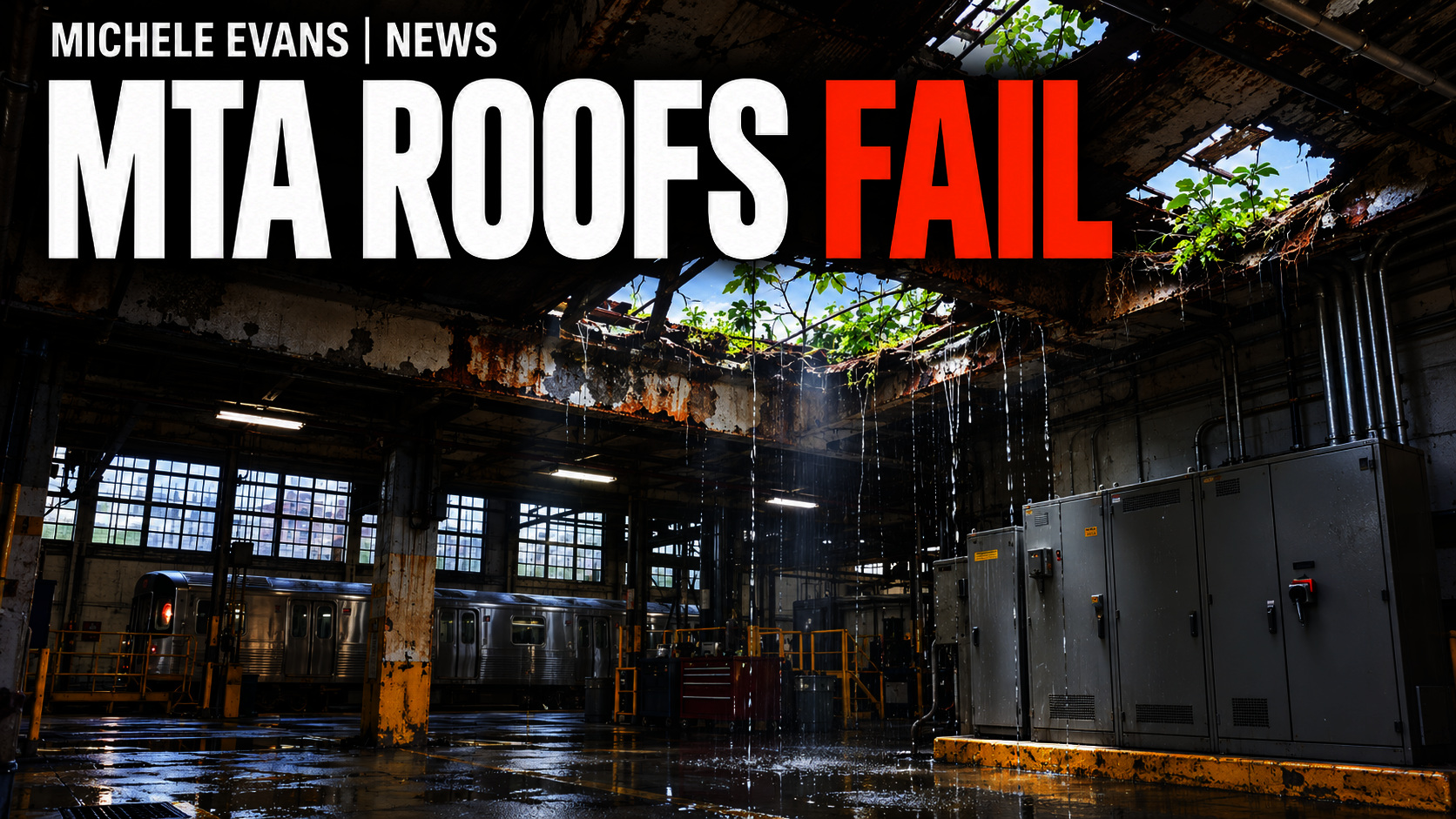
Water was leaking above electrical equipment inside a Bronx subway maintenance shop while vegetation grew through holes in the roof, according to an audit by the Metropolitan Transportation Authority’s inspector general.
The audit examined nine New York City Transit facilities after investigators spotted severe roof damage at the East 180th Street Maintenance Shop during a July 2024 visit. Inspectors found deterioration serious enough to threaten workers, slow repairs and put subway operations at risk.
At East 180th Street, which services the 2 and 5 lines, investigators documented significant water damage, leaks above machinery and a section of the shop that had been condemned. Workers told investigators the roof had been failing for years and that repeated complaints had not produced timely repairs.
The 240th Street shop, where the 1 line is serviced, showed the same pattern. Concrete had fallen from the ceiling after water intrusion, sections of the roof were considered unsafe to access and records showed that repairs had been proposed as early as 1984. A 2002 survey had already documented severe damage.
The watchdog traced the failures beyond old concrete and worn roofing. Internal records understated the damage. Some inspections were performed by staff without specialized training. Workers and facility managers did not always know which office could initiate a capital repair. Those gaps kept dangerous conditions from reaching the people who controlled long-term funding.
That breakdown matters to riders even when the damage sits far from a platform. Maintenance shops keep subway cars in service. Water near electrical systems can injure workers, damage equipment and interrupt the work needed to move trains back into passenger service.
MTA Inspector General Daniel Cort called the conditions unacceptable and said the deterioration was plainly not recent. His office recommended stronger facility assessments, clearer defect reporting and a capital-planning process that reflects the actual severity of structural problems.
New York City Transit said it created a Division of Facilities, formed a dedicated roof team and completed seven repairs. The agency also said a new capital construction team will address additional roof and structural defects. The 2025-2029 capital plan includes roof replacement at East 180th Street and design work for 240th Street.
Those steps answer part of the audit. They do not erase the years in which warnings, inspections and capital planning failed to protect workers or the system. The next accountability test is whether the promised projects are fully funded, completed on schedule and inspected by people qualified to identify structural danger.
Leave a Reply