
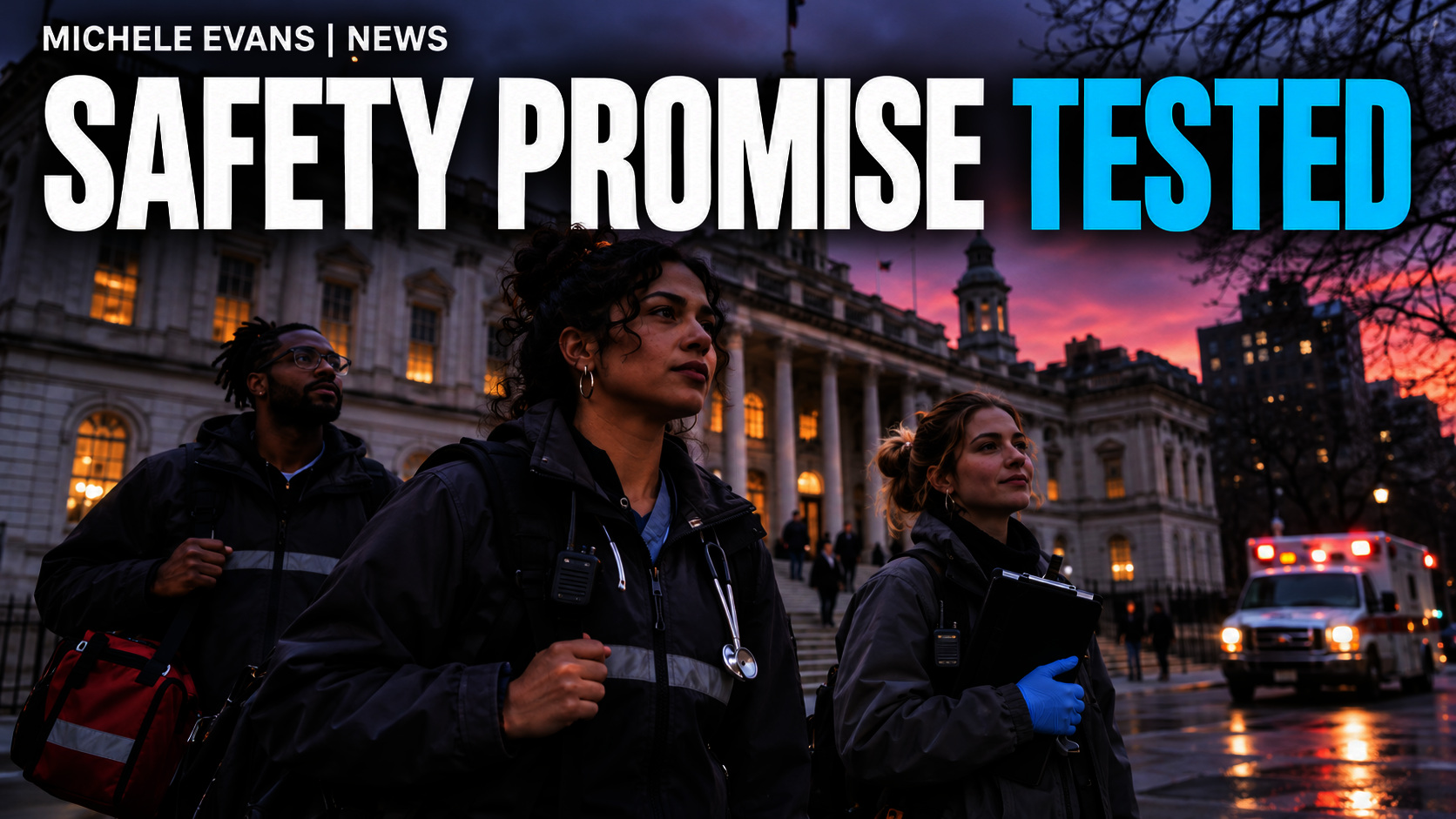
By Michele Evans / NYweeklyRecord.com / Date: 11/2/2026
Category: Public Safety / Mental Health / Government Accountability
NEW YORK CITY, NY –
New York City lawmakers have moved a long-promised public-safety overhaul from the campaign trail into a formal hearing, putting Mayor Zohran Mamdani’s plan for non-police emergency responses under public scrutiny.
The City Council’s public safety and governmental operations committees held a joint hearing Oct. 30 on legislation that would create a Department of Community Safety. The proposed agency would coordinate emergency responses with health officials, social-service providers and existing first responders.
The bill’s mandate is broad. It calls for field operations that can deliver services to vulnerable New Yorkers and preserve public health, safety and welfare. Councilmember Lincoln Restler, the prime sponsor, has described a system that expands violence interruption, coordinates homelessness and mental-health services and provides 24-hour de-escalation responses.
That is a larger promise than the Office of Community Safety that Mamdani created after taking office. The hearing forces a basic accountability question: will the administration build the full agency it promoted, or leave the work spread across programs with limited authority and uneven coverage?
The distinction is not bureaucratic. Families calling 911 during a mental-health crisis must decide whether a police response will make a dangerous moment safer. Advocates have pressed the city for trained health and crisis workers who can respond without turning every call into a law-enforcement encounter.
The proposal also raises hard operational questions that the hearing did not settle. The city has not publicly fixed the department’s budget, staffing, chain of command or the categories of 911 calls that could be diverted from police. A new name will not protect anyone unless trained teams are available around the clock and dispatchers know when to send them.
Restler said the department could let police concentrate on preventing and solving violent crime while civilian teams handle calls better suited to health and social-service professionals. He said the measure had 34 cosponsors before the hearing, enough to signal substantial Council support.
A companion bill would create a three-digit gun-violence intervention hotline connecting callers to mental-health and supportive services. It would also require a public-awareness campaign aimed at young adults and annual reporting on whether the hotline actually coordinates help.
Both measures were heard and laid over, meaning no final Council vote occurred. That leaves the central promise unfinished. The public can now judge the proposal by measurable results: response times, crisis outcomes, service availability, police-call diversions and whether neighborhoods with the greatest needs receive the same coverage as wealthier parts of the city.
Leave a Reply