
By Michele Evans / NYweeklyRecord.com / Date: 10/12/2026
Category: Transit Safety / Worker Safety / Public Accountability
NEW YORK CITY, NY –
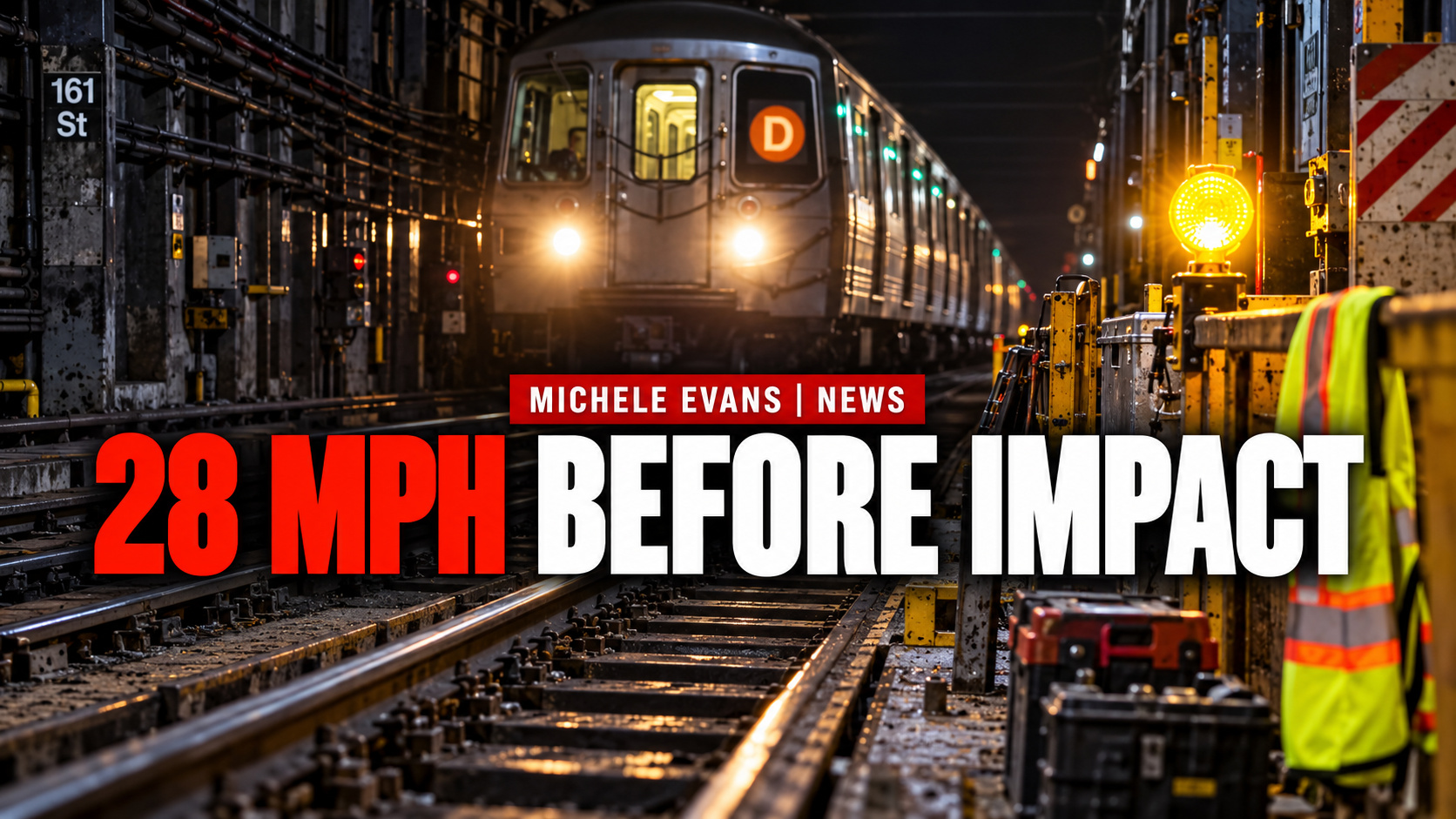
A D train reached about 28 miles per hour after its operator had been warned that workers were preparing track protection ahead, according to the National Transportation Safety Board’s preliminary account of the death of transit worker Moet McCullum.
McCullum, 41, was killed late September 3 while working as a construction flagger near the 161st Street-Yankee Stadium station in the Bronx. She was a mother of three and had worked for New York City Transit for about 11 months, according to her union.
The NTSB says the flagging team was preparing to establish protection for work inside a subway tunnel. An advance flagger at 167th Street told the southbound train operator that employees were setting up protection farther down the line.
The train then continued south on track C1 and reached an estimated 28 mph. A flagger near 161st Street saw it approaching and blew a whistle. The operator saw workers and applied emergency braking seconds before impact.
Most members of the team reached a safe area between tracks. McCullum, who was near the bench wall beside track C1, did not. She was taken to a hospital and pronounced dead.
The tunnel was dark, with workers relying on flashlights and platform light. The train had headlights, but it did not have an event recorder or outward-facing audio or video recorders. The speed estimate came from signal-system data.
Those missing records matter. In 2025, the NTSB said the lack of operational event and video recorders prevented investigators from determining what caused the 2023 death of flagger Hilarion Joseph, who was also struck by a D train.
The new preliminary report does not assign blame. It does not say why the train continued after the advance warning, whether full work-zone protection had been established, or whether McCullum had enough time and space to reach safety.
The NTSB investigation remains open. The Federal Transit Administration, state transportation agencies, the Metropolitan Transportation Authority and the Transport Workers Union are participating.
McCullum’s death is not just a workplace tragedy. It tests whether the transit system learned enough from an earlier flagger fatality and whether crews have reliable protection before trains enter active work zones.
A final investigation must answer what the advance warning required, what the operator understood, what protection was active and whether recording equipment could have produced a clearer account. Until then, the 28 mph figure is a confirmed data point, not a final finding of fault.
Sources
National Transportation Safety Board: D Train Worker Fatality Investigation
Leave a Reply