
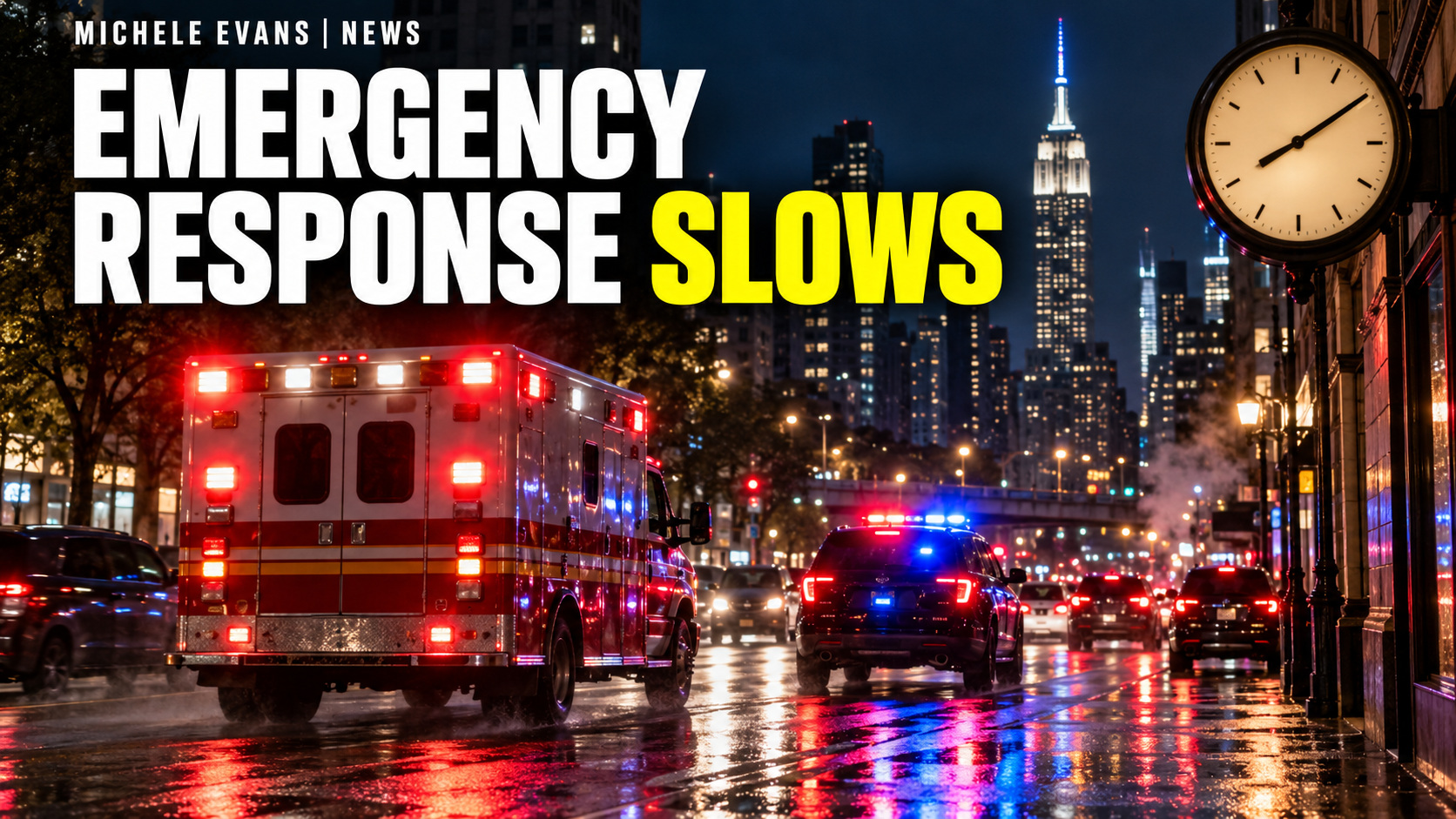
NEW YORK CITY, NY – New Yorkers waited longer for police, fire and ambulance help across several critical measures in fiscal year 2026, according to the city’s newly released Mayor’s Management Report.
The NYPD’s average response time for all crimes in progress reached 15 minutes and 21 seconds, 28 seconds slower than the prior year. Response time for critical crimes rose to 9 minutes and 38 seconds. The department did record a modest improvement for serious crimes, with the average falling to 12 minutes and 35 seconds.
The FDNY numbers also moved in the wrong direction. Ambulance response for life-threatening medical emergencies increased from 11 minutes and 21 seconds to 13 minutes and 9 seconds. Fire-unit response time rose to 11 minutes and 55 seconds, while the response to structural fires remained near five minutes.
These are not abstract performance marks. Minutes matter when a person is bleeding, struggling to breathe, trapped in a building or waiting for officers during an active threat. A city that measures emergency response has an obligation to explain sustained delays and show what will change.
The report also shows NYPD overtime spending fell 12 percent, from about $1.1 billion to $966 million. The figures do not prove that lower overtime caused slower response. Call volume, staffing, deployment, traffic, hospital turnaround times and the types of incidents all can affect how quickly help arrives.
That is why the city owes the public more than competing talking points. Agency leaders should identify which neighborhoods and call categories saw the largest delays, what staffing levels were available and whether dispatch or hospital bottlenecks contributed.
The NYPD said major crime continued to fall and noted that emergency call volume increased. Those outcomes can coexist with slower service. Lower crime does not erase the experience of someone waiting for help, and slower averages do not by themselves show that every emergency was mishandled.
The Mayor’s Management Report is required by the City Charter and is intended to provide a public account of agency performance. Its value depends on whether officials use the data to correct failures, not simply publish them.
New Yorkers should expect clear benchmarks for improvement, regular public updates and a timetable for reducing delays. When the clock is measuring an emergency, accountability has to move faster than the response time.
Sources
NYC Mayor’s Office of Operations: Fiscal 2026 Mayor’s Management Report
New York Post: NYPD and FDNY Emergency Response Times Get Slower
Leave a Reply