
By Michele Evans / NYweeklyRecord.com / Date: 10/23/2026
Category: Rikers Island / Corrections / Government Accountability / Community Health
NEW YORK CITY, NY –
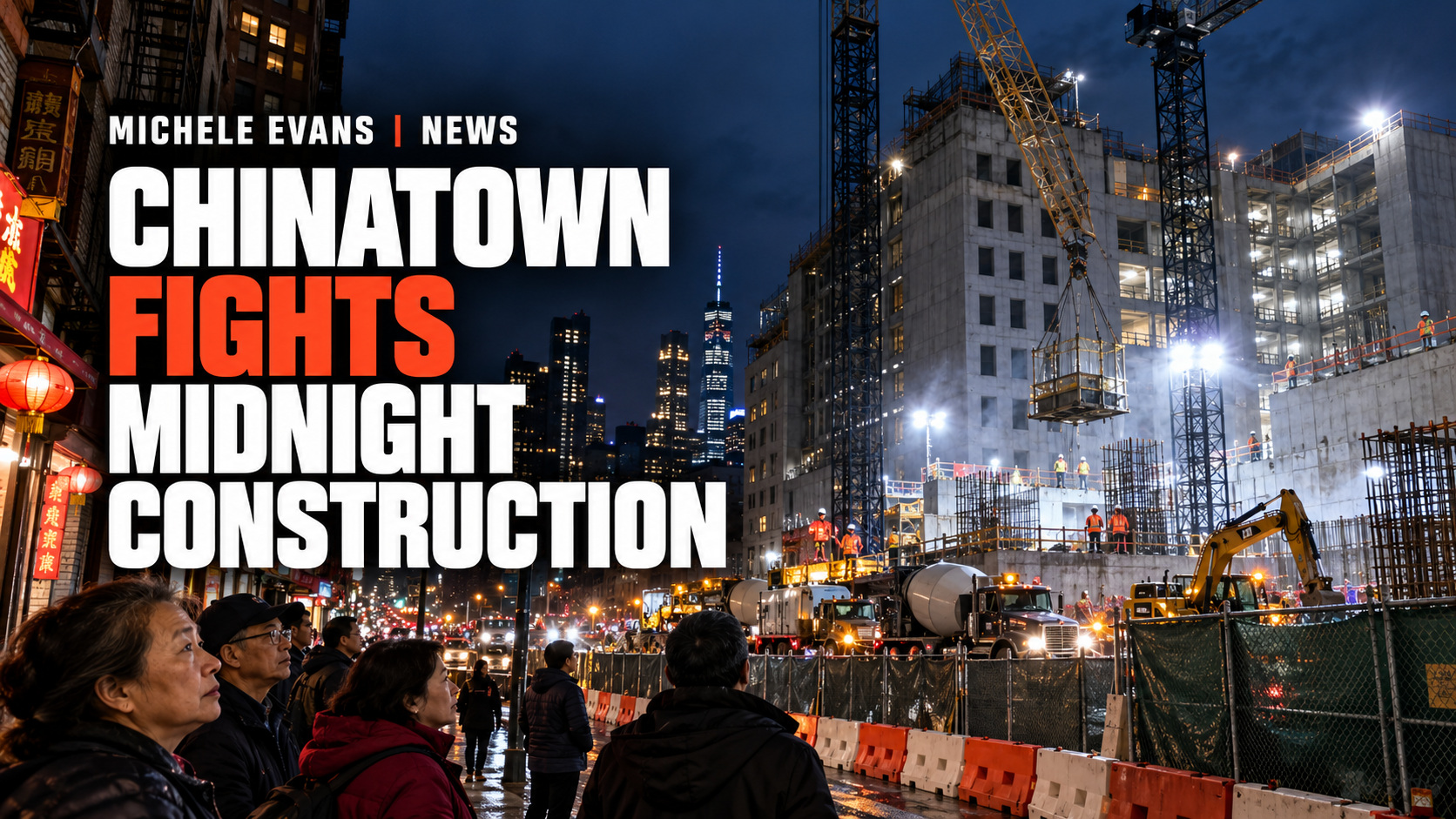
Chinatown residents are asking a state court to stop extended construction hours at the Manhattan jail being built as part of New York City’s plan to close Rikers Island.
The lawsuit, filed Wednesday in Manhattan Supreme Court, targets a schedule that permits work at the White Street site from early morning until midnight on weekdays, plus weekend construction. Plaintiffs say the city imposed the expanded hours without completing the additional environmental review required for a major change in the project’s impact.
No judge has ruled on those claims. The complaint represents the residents’ allegations, and the city is expected to defend the schedule.
The dispute centers on the Manhattan Borough-Based Jail at 124-125 White Street, beside Manhattan Criminal Court. The city says the planned facility will contain 1,040 beds, space for programming and recreation, and ground-floor community and commercial space.
The project is one piece of the citywide borough-based jail plan intended to replace Rikers. That makes the lawsuit more than a neighborhood construction fight. It exposes a conflict at the heart of the closure plan: ending detention on a remote, troubled island while preventing the replacement system from imposing new harms on communities asked to host the jails.
According to the lawsuit and local reporting, the expanded schedule took effect October 12. Residents say drilling, excavation, truck traffic, idling engines, floodlights, dust and vibration now stretch across most of the day and into the night.
Neighbors United Below Canal and Welcome to Chinatown are among the plaintiffs. Individual residents say the work disrupts sleep, aggravates health concerns and makes ordinary life difficult for seniors living near the site.
Filmmaker Jon Alpert, 77, told reporters that the construction has interfered with his recovery from treatment for a 9/11-related illness. Other residents described being unable to open windows or escape bright nighttime lighting.
Those accounts are allegations in pending litigation, not findings by the court. But they raise a measurable accountability question: did city officials adequately reassess environmental and public-health consequences before authorizing a far more intensive construction schedule?
The city’s own October construction advisories confirm that extended and overnight work was planned. The Department of Design and Construction says it publishes weekly bulletins, community advisories and environmental-monitoring reports for the project.
City officials have also said that dust, noise and vibration monitors are operating at the site and that contractors use mufflers, sound blankets and other mitigation measures. A mayoral spokesperson said the city would respond to the lawsuit in court.
The plaintiffs argue that monitoring does not replace the legal duty to study the effects of the expanded hours. They want the court to halt late-night and weekend work until the city conducts a supplemental environmental review.
The city says accelerating construction could move completion forward by about two years, to 2032. Even that date would come years after the 2027 deadline set by city law for closing Rikers.
That delay leaves New York with two unresolved obligations. The city must end the dangerous and costly jail system on Rikers, and it must build a replacement system without treating nearby residents as collateral damage.
Closing Rikers cannot depend on ignoring Chinatown. A humane jail policy loses its credibility if the process used to build it subjects another community to years of unchecked disruption.
The court will decide whether the city followed environmental law. City Hall must answer the larger question now: whose health and quality of life count when government declares a project urgent?
Sources
NYC Department of Design and Construction, Manhattan Borough-Based Jail Facility
NYC Department of Design and Construction, Extended Work Hours Advisories
Curbed, Chinatown Residents Sue to Stop Manhattan Jail’s Late-Night Construction
Leave a Reply