
By Michele Evans / NYweeklyRecord.com / Date: 10/19/2026
Category: Rikers Island / Criminal Courts / Civil Rights / NYC Department of Correction
NEW YORK CITY, NY –
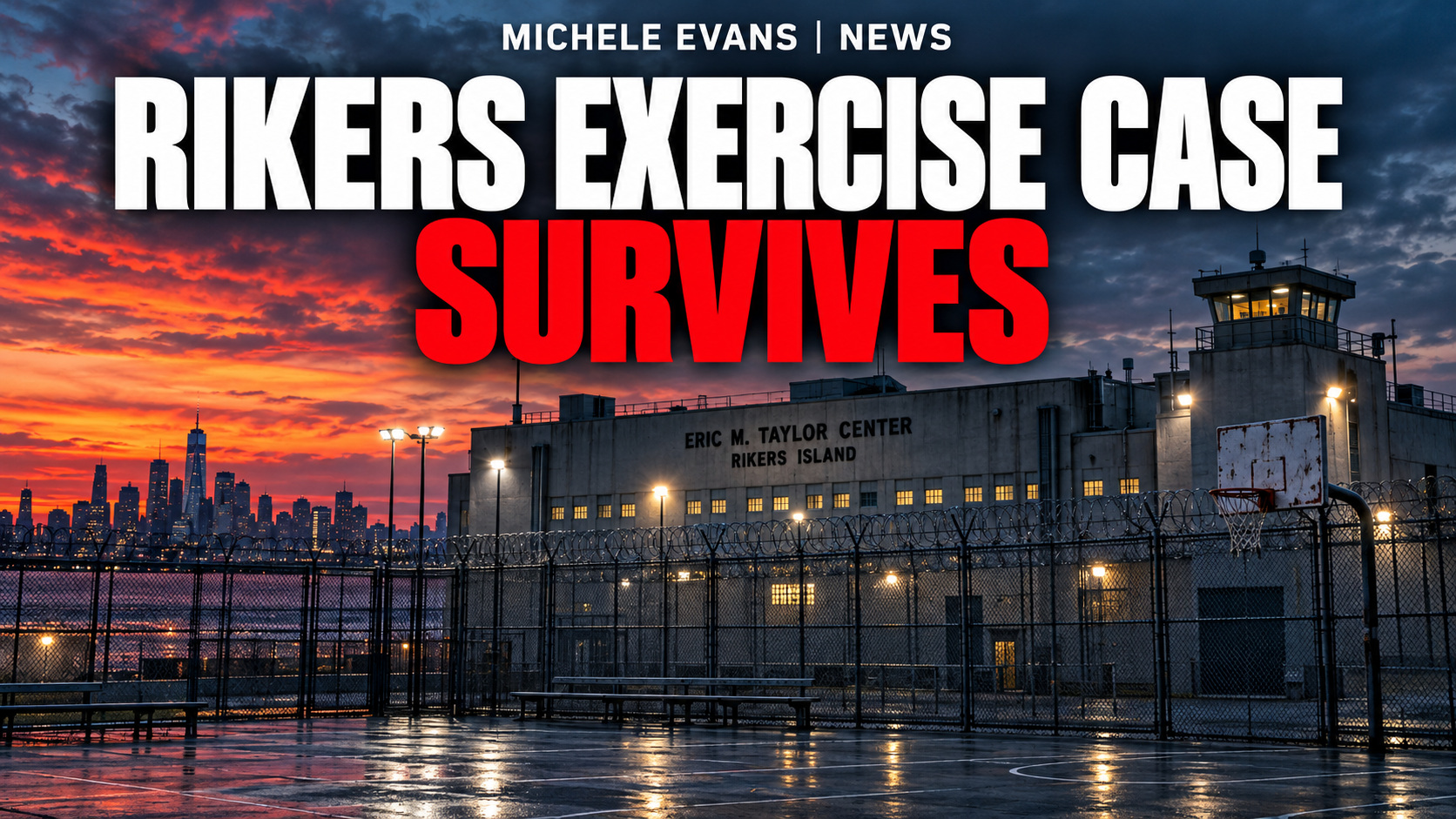
A federal judge has refused to dismiss claims that New York City denied pretrial detainees meaningful exercise at the Eric M. Taylor Center on Rikers Island, rejecting the city’s request for a rule that would end any claim involving 27 days or less.
U.S. District Judge Denise Cote denied the city’s partial summary judgment motion on October 14. The ruling does not decide that the city violated the Constitution. It means a jury could reasonably find a violation after examining the conditions, timing and justification for each period of confinement.
The case was brought by Raymond Lewis and Aaron Ortega on behalf of themselves and other detainees. They allege that the city and correction officials deprived people held at the Taylor Center of meaningful exercise during and after the COVID-19 emergency.
The center reopened in September 2021 as a quarantine site for new Rikers admissions. Detainees were initially held in quarantine for 14 days, later reduced to 10. If someone in a group developed symptoms, the remaining detainees could face additional days of quarantine.
The restrictions outlasted the emergency. The court record says some detainees remained at the Taylor Center for weeks after quarantine, and the facility began permanently housing people in September 2023, four months after the federal COVID emergency ended.
Indoor gyms were unavailable to quarantined detainees. The outdoor yard had fallen into disrepair and did not reopen until June 18, 2024. Department of Correction policy generally requires one hour of outdoor recreation each day unless weather prevents it.
Lewis spent 20 days at the center in late 2022 and was denied all exercise, according to the ruling. Ortega had no indoor or outdoor recreation during a 12-day stay in 2023. After returning that September, he went 263 days without outdoor exercise. The parties dispute how much indoor recreation was available during that longer period.
The city asked Cote to dismiss every Fourteenth Amendment exercise claim lasting 27 days or less. She declined. The judge wrote that constitutional conditions cases require a fact-intensive inquiry and that a bright-line cutoff would sweep together detainees held under very different circumstances.
That distinction matters because pretrial detainees have not been convicted. Their claims arise under the Fourteenth Amendment’s Due Process Clause, which bars punishment before conviction. To prevail, the plaintiffs must still prove that the conditions were sufficiently serious and that officials acted intentionally or recklessly failed to address an excessive health or safety risk.
The ruling also keeps the plaintiffs’ municipal-liability claim in the case. The court did not decide that an unlawful city policy existed. It held that the defendants had not shown they were entitled to judgment before trial on the current record.
The city now faces scrutiny over a basic jail function. Exercise is tied to physical and mental health, especially for people confined in crowded housing. The case asks whether public-health precautions became a prolonged deprivation after their stated justification weakened or disappeared.
No damages or final relief were awarded. Class certification in this case has not been renewed. The next stage will test disputed facts about what exercise was actually available, why restrictions continued and who was responsible for the conditions.
Leave a Reply