
By Michele Evans / NYweeklyRecord.com / Date: 10/7/2026
Category: Courts / Government Accountability / Taxpayer Protection / Legal Ethics
NEW YORK CITY, NY –
New York City has accused a Manhattan personal-injury firm and two of its attorneys of building lawsuits on false accident stories, then seeking millions of dollars from taxpayers for injuries the city says it did not cause.
The allegations are contained in an 80-page civil complaint filed October 4 in Manhattan federal court against Asher & Associates, Ryan H. Asher and Roberta D. Asher. No court has ruled that the defendants committed fraud. The defendants had not publicly responded to requests for comment reported by Reuters as of October 6.
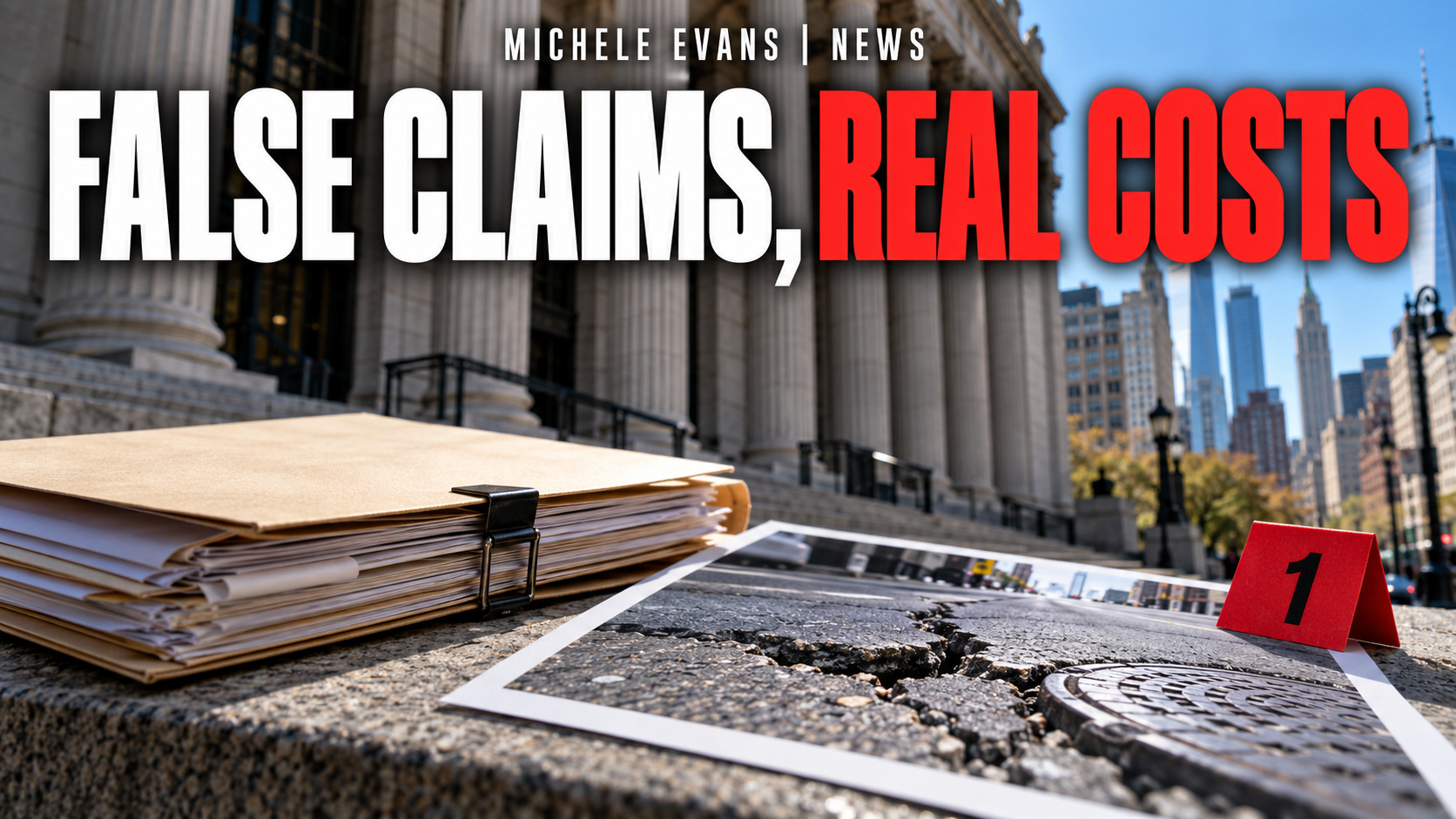
The city says the firm recast assaults, hit-and-run crashes and other incidents as accidents caused by broken streets, sidewalks or other city property. The complaint identifies 15 lawsuits as examples and alleges they are only part of a much larger pattern.
According to the city, clients who initially told medical providers they were hurt in fights, struck by vehicles or injured in other ways later appeared in lawsuits claiming defective city roadways caused the same injuries. Those contradictions are now at the center of a federal racketeering case.
The lawsuit alleges violations of the federal Racketeer Influenced and Corrupt Organizations Act and the New York State and New York City false claims laws. The city is seeking damages and other relief. Civil RICO claims can allow successful plaintiffs to recover triple damages, but the city still must prove its allegations in court.
The case asks a blunt accountability question: how many public dollars may have been paid because the government relied on stories that did not match the underlying records?
New York City handles thousands of personal-injury claims each year. Legitimate claims are an essential way for people harmed by government negligence to seek compensation. Fraudulent claims, if proven, divert money from actual victims and force taxpayers to finance legal fees, settlements and judgments that should never have existed.
The city says the firm dropped cases after government lawyers confronted it with contradictory accounts. The complaint also alleges the 15 cited matters are the “tip of the proverbial iceberg” and seeks discovery into other cases that may have generated millions of dollars in fees, settlements and judgments.
The allegations extend beyond questionable pleading language. A lawsuit is signed and filed in court, placing factual claims before a judge and forcing the opposing party to spend public money responding. If lawyers knowingly changed the cause of an injury to create municipal liability, the alleged harm would reach the courts, the city treasury and people with legitimate claims waiting for their cases to be heard.
The federal docket lists the matter as City of New York v. Ryan H. Asher, et al., case number 1:26-cv-08753. U.S. District Judge Edgardo Ramos is assigned to the case, and Magistrate Judge Sarah Netburn may handle referred matters. Summonses were issued October 5.
The filing is a complaint, not a verdict. The city must establish the alleged scheme with evidence, and the defendants are entitled to contest the claims. The number of additional cases, if any, that fit the city’s theory also remains unknown.
What happens next will matter beyond one law firm. The litigation could test whether the city’s claim-review systems can spot conflicting medical and legal narratives before money is paid, and whether existing safeguards are strong enough to distinguish real negligence from manufactured liability.
The city’s False Claims Act authorizes recovery of triple damages for fraudulent claims submitted to the government. That power is meant to recover public money after fraud is uncovered. The tougher question is why the alleged contradictions were not caught sooner and how many other files may require review.
For taxpayers, the stakes are measurable. Every unsupported payout reduces the money available for streets, schools, emergency services and legitimate compensation. For real injury victims, a fraud scandal can also deepen suspicion around claims that deserve to be taken seriously.
The complaint puts the legal system itself under examination. The city is accusing officers of the court of using that system to shift private injuries onto the public ledger. Now the evidence, the defendants’ response and the court’s rulings must determine whether that charge holds.
Sources
City of New York v. Asher et al. Docket
Reuters: NYC Sues Manhattan Law Firm Alleging Bogus Injury Suits
Leave a Reply