
By Michele Evans / NYweeklyRecord.com / Date: 10/6/2026
Category: Criminal Courts / Disability Rights / Civil Rights / Court Administration
NEW YORK CITY, NY – A blind Brooklyn lawyer who says he was barred from voting on grand jury cases involving visual evidence can continue his federal disability lawsuit against New York’s court system, putting a basic question of access inside the institution charged with enforcing equal rights.
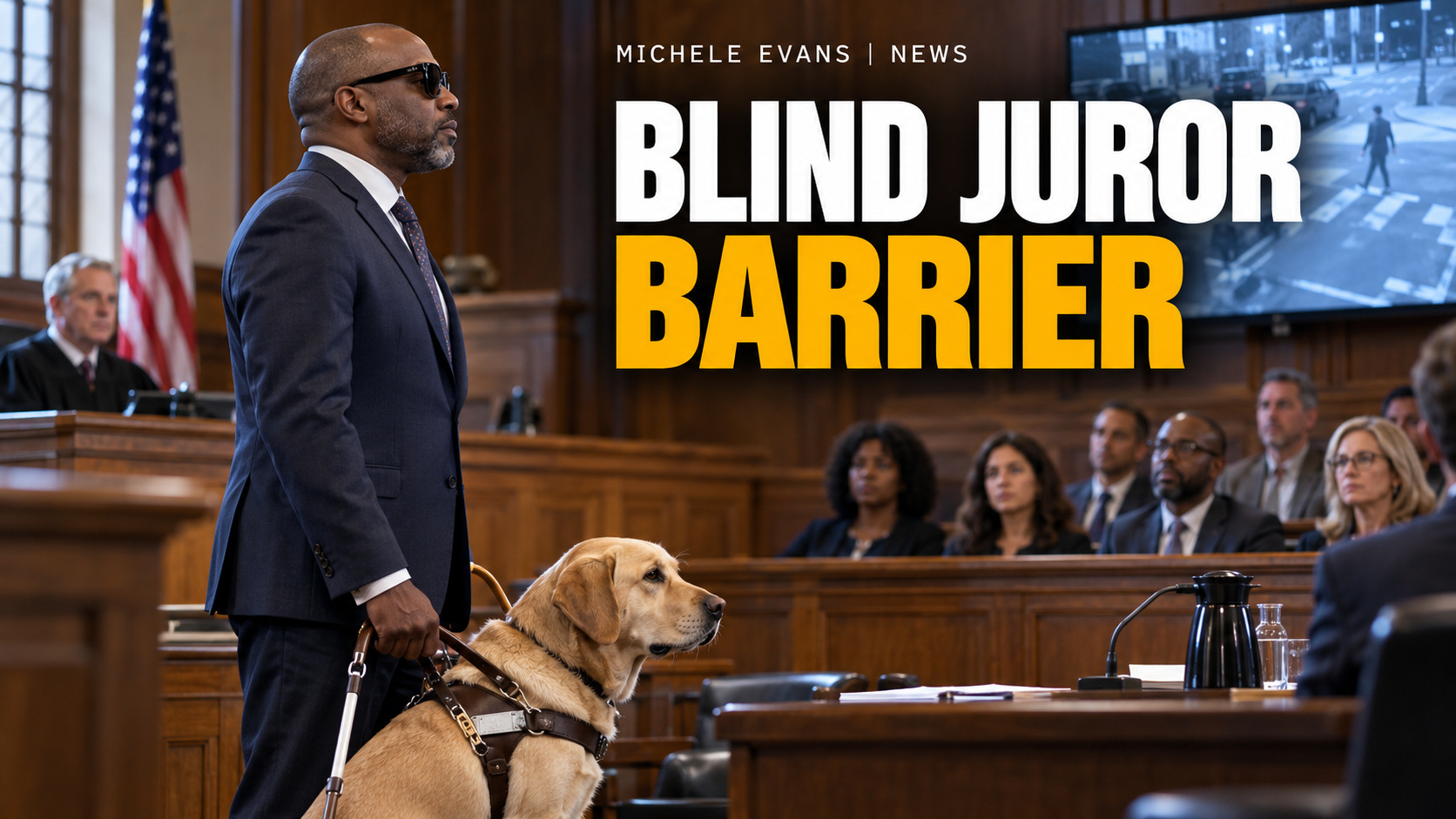
Albert Elia reported to Kings County Supreme Court for grand jury service in October 2024 with his guide dog. Court staff helped him complete paperwork, offered a Braille grand juror manual, provided space for the dog and allowed him to take notes on a laptop, according to court filings and interviews reported by Gothamist and the Queens Daily Eagle.
The accommodation stopped when prosecutors began presenting photographs and video.
Elia alleges that some prosecutors had witnesses describe visual exhibits while others showed silent footage without explaining what appeared on screen. He asked for descriptions of the evidence and proposed assistive technology, but the presiding judge told him he could not deliberate or vote in cases that relied heavily on visual material, court records show.
Elia then asked to be discharged because excluding him from those cases would prevent him from taking part in most of the grand jury’s work. The judge granted the request.
The allegations have not been proven at trial. The New York State Unified Court System denies that it engages in widespread discrimination and says blind or visually impaired people are not prohibited from jury service. A court spokesperson said reasonable accommodations are available but declined to discuss pending litigation.
The legal fight is now moving forward. U.S. District Judge Ramón E. Reyes Jr. substantially denied the court system’s effort to dismiss the case on September 14. He found that Elia had plausibly alleged violations of Title II of the Americans with Disabilities Act and Section 504 of the Rehabilitation Act.
The ruling did not decide whether the court system violated federal law. It decided that Elia’s central claims are strong enough to be litigated.
That distinction matters. A motion to dismiss tests whether a complaint states a legally viable claim, not whether the plaintiff has proved every allegation. Discovery and later proceedings will determine what policies existed, what accommodations were available and whether officials met their obligations.
Reyes found a direct link between Elia’s exclusion and the absence of a workable accommodation process for blind grand jurors. According to Disability Rights Advocates, the judge concluded that the court system’s failure to provide reasonable accommodations could have deprived Elia of a meaningful chance to participate.
The case exposes a gap between broad promises of access and what happens when a juror needs help evaluating modern evidence. New York courts tell jurors with disabilities that auxiliary aids may be available. Elia’s experience raises the question of whether those assurances are backed by clear procedures for photographs, surveillance footage and body-camera video.
Grand juries do not decide guilt. They hear evidence presented by prosecutors and determine whether there is sufficient basis to bring criminal charges. Excluding a sworn juror from deliberations can affect both civic participation and the legitimacy of a process conducted largely outside public view.
There is also a practical issue. Visual evidence is now routine in criminal cases. A policy that allows blind jurors to serve only when no images or video are involved could amount to exclusion from most meaningful service.
Elia’s lawyers argue that courts can use witness descriptions, accessible technology and advance planning without compromising the rights of defendants or the independence of jurors. The court system will have the opportunity to contest those claims and show what safeguards it believes are required.
A separate case brought by another blind prospective juror was dismissed earlier this year after a Manhattan federal judge found that the trial court had balanced accommodation concerns against the parties’ rights in a specific criminal trial. Reyes distinguished Elia’s allegations because Elia had already been sworn as a grand juror and was categorically blocked from cases involving visual evidence.
The unresolved question is bigger than one summons. New York’s courts must explain whether equal access ends when evidence appears on a screen, or whether the system will build a reliable way for blind New Yorkers to serve.
Sources
Gothamist: Blind Man Dismissed From Grand Jury Duty Can Sue NY for Discrimination, Judge Rules
Disability Rights Advocates: Federal Court Rules Blind Juror Case Can Proceed
Queens Daily Eagle: Lawsuit Alleging Courts Discriminated Against Blind Juror Moves Forward
Leave a Reply