
By Michele Evans / NYweeklyRecord.com / Date: 9/28/2026
Category: Immigration / Civil Rights / Courts / Government Accountability
NEW YORK CITY, NY –
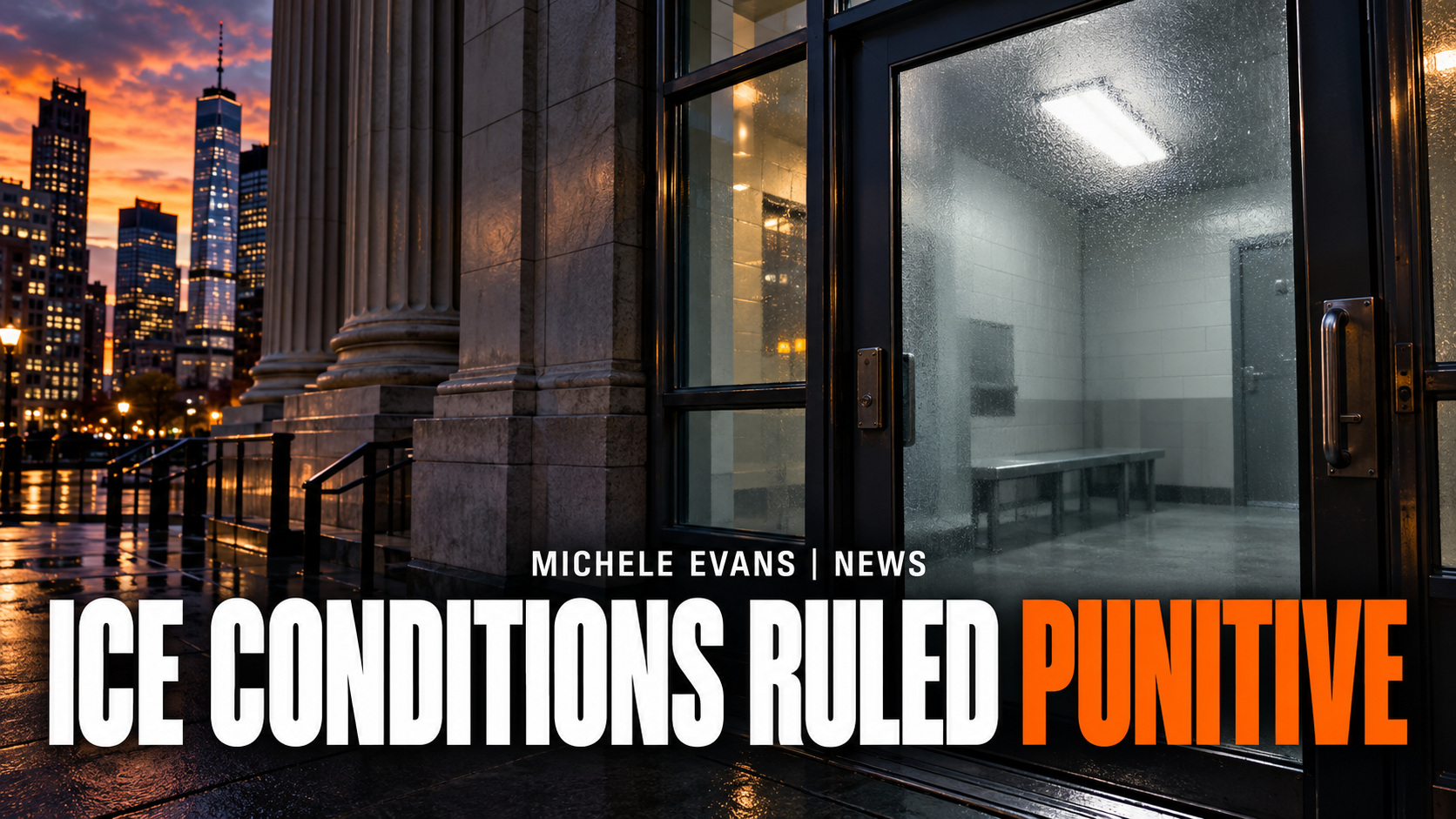
A federal judge has made permanent a sweeping set of protections for immigrants held inside 26 Federal Plaza, finding that federal officials used punishing conditions in lower Manhattan holding rooms to pressure detainees and interfere with access to lawyers.
U.S. District Judge Lewis A. Kaplan issued the ruling Thursday after a trial in Barco Mercado v. Mullin. He certified a class of people detained in the building and concluded that the government deprived detainees of sleep, sanitation, hygiene, sufficient food and water, medical care and meaningful legal access. The court found those failures unconstitutional.
The ruling does not bar immigration arrests or short-term detention at the building. It controls how people must be treated once they are held there.
The rooms were designed for stays of no more than 12 hours, with no beds, showers or windows. The court found that some people were kept longer under crowded conditions and that federal officials repeatedly failed to follow safeguards imposed earlier in the case.
The permanent injunction requires at least 50 square feet per person, room-capacity limits, bedding for overnight stays, temperatures between 68 and 74 degrees, regular cleaning, hygiene supplies, three meals a day and bottled water.
It also requires prompt medical screening and a licensed clinician on site around the clock. Detainees must receive free, confidential calls to lawyers within one hour of arrival, along with access to phone numbers for legal-service organizations.
Those details matter because civil immigration detention is not supposed to operate as punishment. Kaplan found that the conditions were used to inflict punishment and induce people to abandon their cases or accept removal. That finding puts responsibility on federal officials who controlled the rooms, not on individual detainees trying to navigate immigration court.
The Department of Homeland Security has said it is committed to detainee safety and described the rooms as short-term holding space. The agency did not directly answer the court’s specific findings about overcrowding, sleep, sanitation or repeated noncompliance with the earlier order.
The injunction gives detainees and their lawyers enforceable standards. It also creates a clearer record for future court review if the government falls short again.
Unanswered questions remain. The public does not yet know how consistently the new rules will be followed, what internal discipline or management changes will occur, or whether federal officials will appeal. What is clear is that the court found the prior system unlawful and converted temporary protections into permanent obligations.
Sources
U.S. District Court Opinion in Barco Mercado v. Mullin
Leave a Reply