
NEW YORK CITY, NY –
Federal prosecutors say a New York developer built six apartment towers with barriers that can block wheelchair users from entrances, bathrooms, balconies, mailboxes, gyms and other spaces that residents should be able to use.
The U.S. Attorney’s Office for the Southern District of New York filed a Fair Housing Act lawsuit Friday against Stagg Group. The complaint alleges that five Bronx buildings and one New Rochelle building were designed and constructed without required accessibility features. Stagg has not been found liable, and the allegations must be tested in court.
The six buildings contain 607 apartments. They are Riverdale Tower, The Station, The Hudson, The Stables and The Equestrian in the Bronx, plus West View in New Rochelle. Federal inspectors found accessibility problems at every property, according to the complaint.
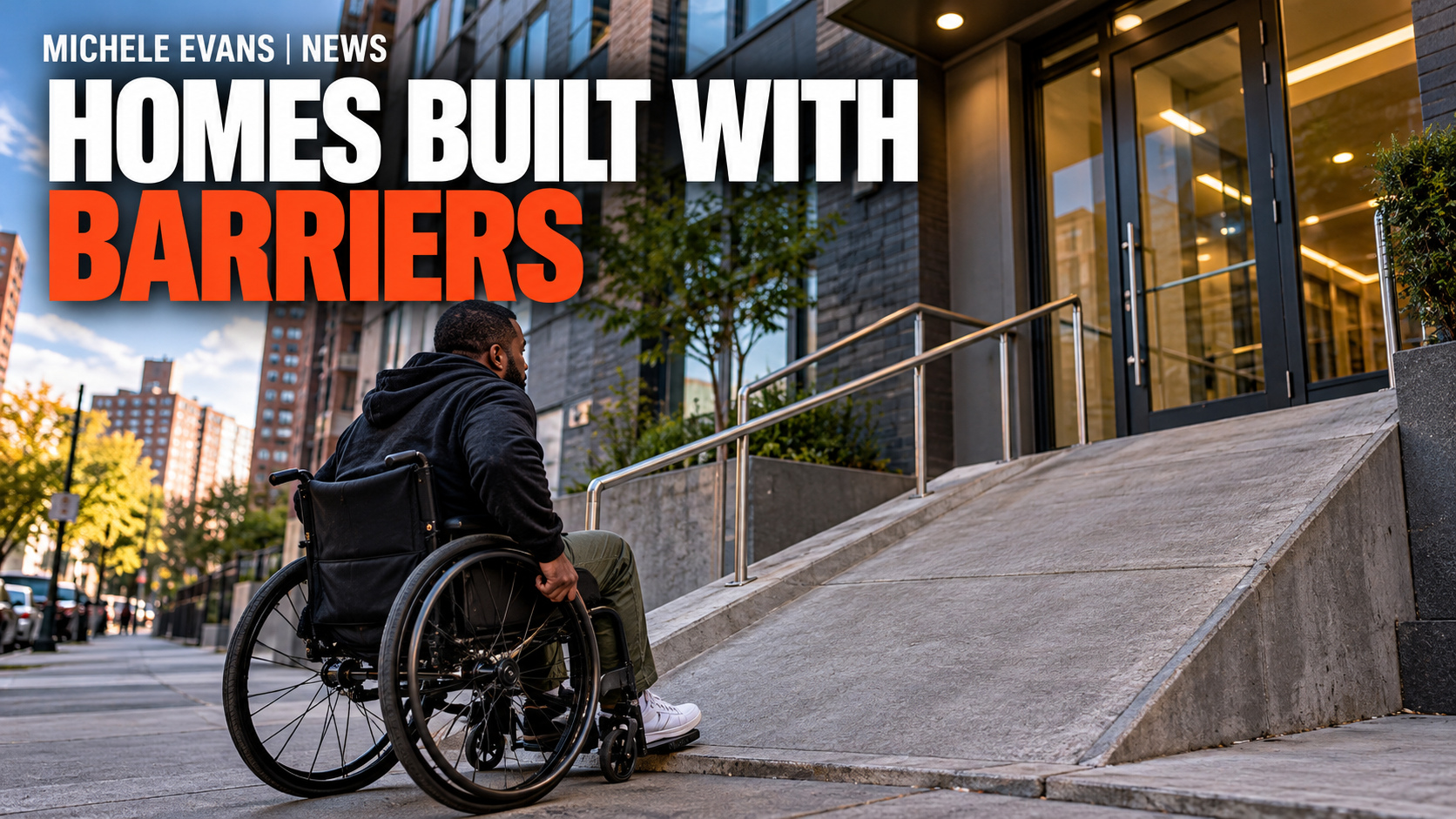
The alleged barriers are basic and concrete. Prosecutors cited doors that require excessive force, mailboxes mounted too high, ramps that are too steep, missing handrails, bathroom and balcony thresholds that are too high, bathroom doors that are too narrow, and spaces with too little room for a wheelchair to maneuver.
At The Station, the lawsuit says the fitness center can be reached only by stairs. At Riverdale Tower, prosecutors allege that the outdoor entertainment-space ramp is too steep and lacks a handrail. At The Equestrian, the complaint says the front door requires too much force and some trash rooms lack enough maneuvering space. At West View, prosecutors say the curb ramp is too steep and obstructions block the laundry-room route.
Those claims matter because the Fair Housing Act has required covered multifamily housing built for first occupancy after March 13, 1991, to include basic accessibility features. The government says all six properties fall under those rules. Five were completed between 2016 and 2024; the complaint also alleges violations of New York City Local Law 58 at the Bronx properties.
The Justice Department is asking a federal judge to order retrofits in apartments and common areas, require future compliance policies, compensate people harmed by the alleged discrimination, and impose a civil penalty. The complaint also identifies four other Stagg-associated properties where prosecutors say the alleged pattern may extend, including buildings in the Bronx, Astoria, Port Chester and New Rochelle.
The public question is how buildings that were required to meet accessibility standards reached occupancy with alleged barriers repeated across multiple properties. The complaint does not identify which architects, inspectors or public agencies approved each design and construction stage. It also does not state how many residents encountered the barriers or what retrofits would cost.
People who believe they experienced discrimination at the six properties can contact the Civil Rights Unit of the U.S. Attorney’s Office for the Southern District of New York. Any recovery or required construction changes will depend on the federal case.
Sources
U.S. Attorney’s Office, Southern District of New York
Leave a Reply