
By Michele Evans / NYweeklyRecord.com / Date: 9/15/2026
Category: Immigration / Civil Rights / Government Accountability / Federal Courts
NEW YORK CITY, NY –
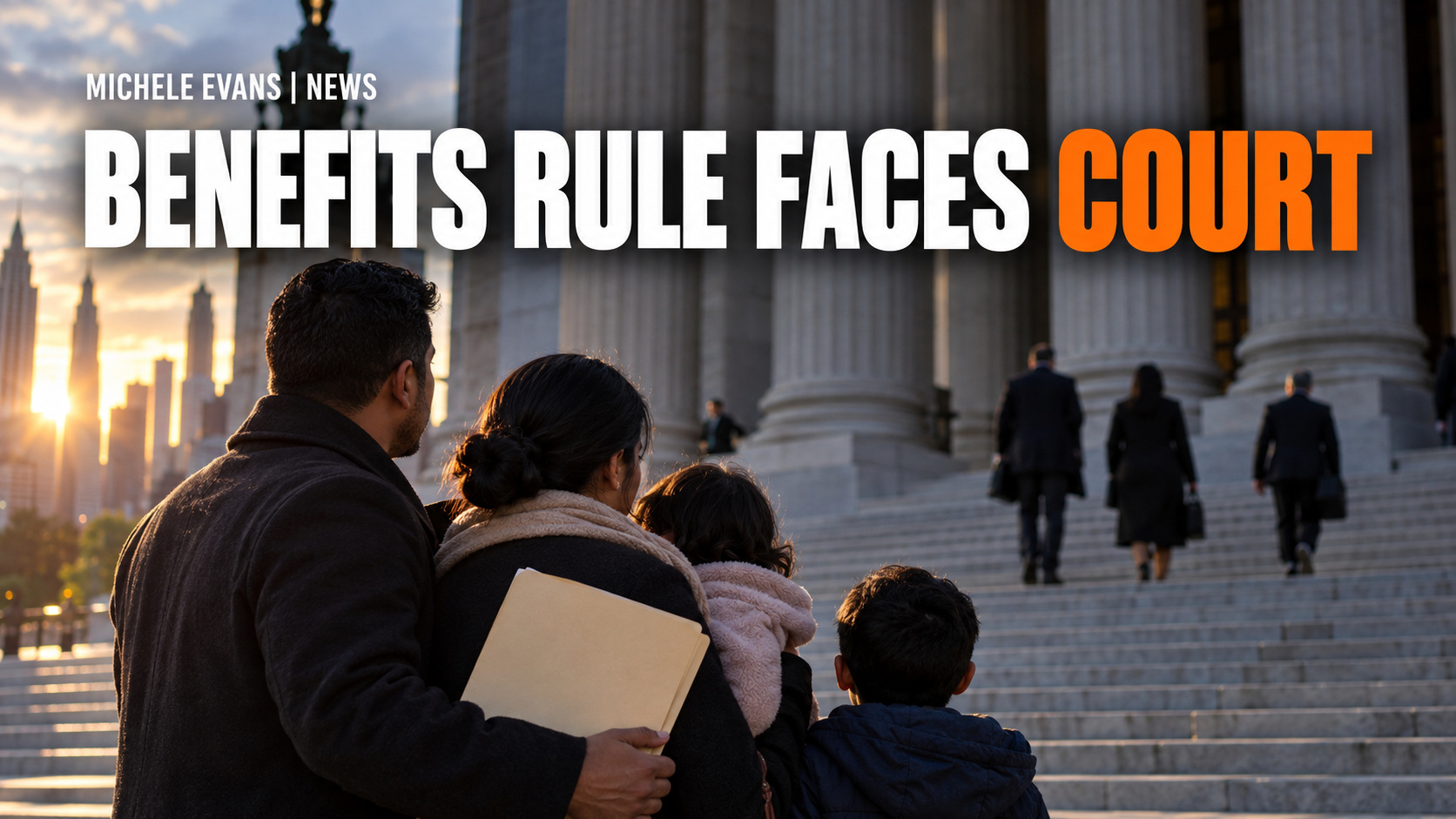
New York state and New York City have filed separate federal lawsuits seeking to stop a new public-charge rule before it takes effect Friday, arguing that it gives immigration officers broad power to penalize families for using lawful public benefits.
Attorney General Letitia James led a coalition of 21 other states and the District of Columbia in one case. Mayor Zohran Mamdani announced a second challenge brought by New York City with Chicago, San Francisco, Santa Clara County, Seattle, King County and the Public Rights Project. Both cases were filed Monday in the U.S. District Court for the Southern District of New York.
The lawsuits are challenges, not rulings. A federal judge has not yet decided whether the Department of Homeland Security exceeded its authority or whether the rule may take effect on September 18.
Under the policy described in the complaints, immigration officers could consider nearly any means-tested public benefit when deciding whether a person is likely to become a public charge. The state and city say the rule provides no clear limit on which benefits count, how long they may be used or how much weight an officer may give them.
The policy could also reach benefits used by family members. The attorney general said a noncitizen parent’s application could be affected because a U.S. citizen child receives state health insurance or free school meals.
That possibility is central to the cases. The plaintiffs argue that fear of immigration consequences will drive eligible residents, including citizens, away from food assistance and health coverage even when the rule does not apply to them.
The state complaint says DHS has projected a nationwide loss of $4.05 billion a year in Medicaid and Children’s Health Insurance Program funding and another $1 billion in SNAP funding because of reduced enrollment. Those figures are the agency’s projections as presented by the attorney general, not a measure of losses that have already occurred.
The fallout could land in emergency rooms, schools and neighborhood grocery stores. Families that delay medical care may rely on hospital emergency departments. Schools can lose automatic meal certifications and federal aid tied to benefit enrollment. Stores in low-income communities can lose SNAP spending.
The lawsuits contend that the rule violates the Administrative Procedure Act because it is arbitrary and capricious, exceeds DHS’s statutory authority and breaks from the longstanding definition of a public charge as someone primarily dependent on government support for long-term subsistence.
The administration has not yet filed its court response in the cases. That response will matter because the current public record is led by the claims of the state and local plaintiffs.
For New Yorkers, the immediate question is practical: whether families will keep using health care and food programs while the court fight unfolds. The effective date is days away, and the requested court relief has not yet been granted.
Leave a Reply