
By Michele Evans / NYweeklyRecord.com / Date: 8/24/2026
Category: Rikers Island / NYC Department of Correction / Infrastructure Safety / Government Accountability
NEW YORK CITY, NY – A coalition of Chinatown leaders is warning that construction of Manhattan’s replacement jail could put surrounding buildings at risk, escalating a neighborhood fight over the plan to close Rikers Island.
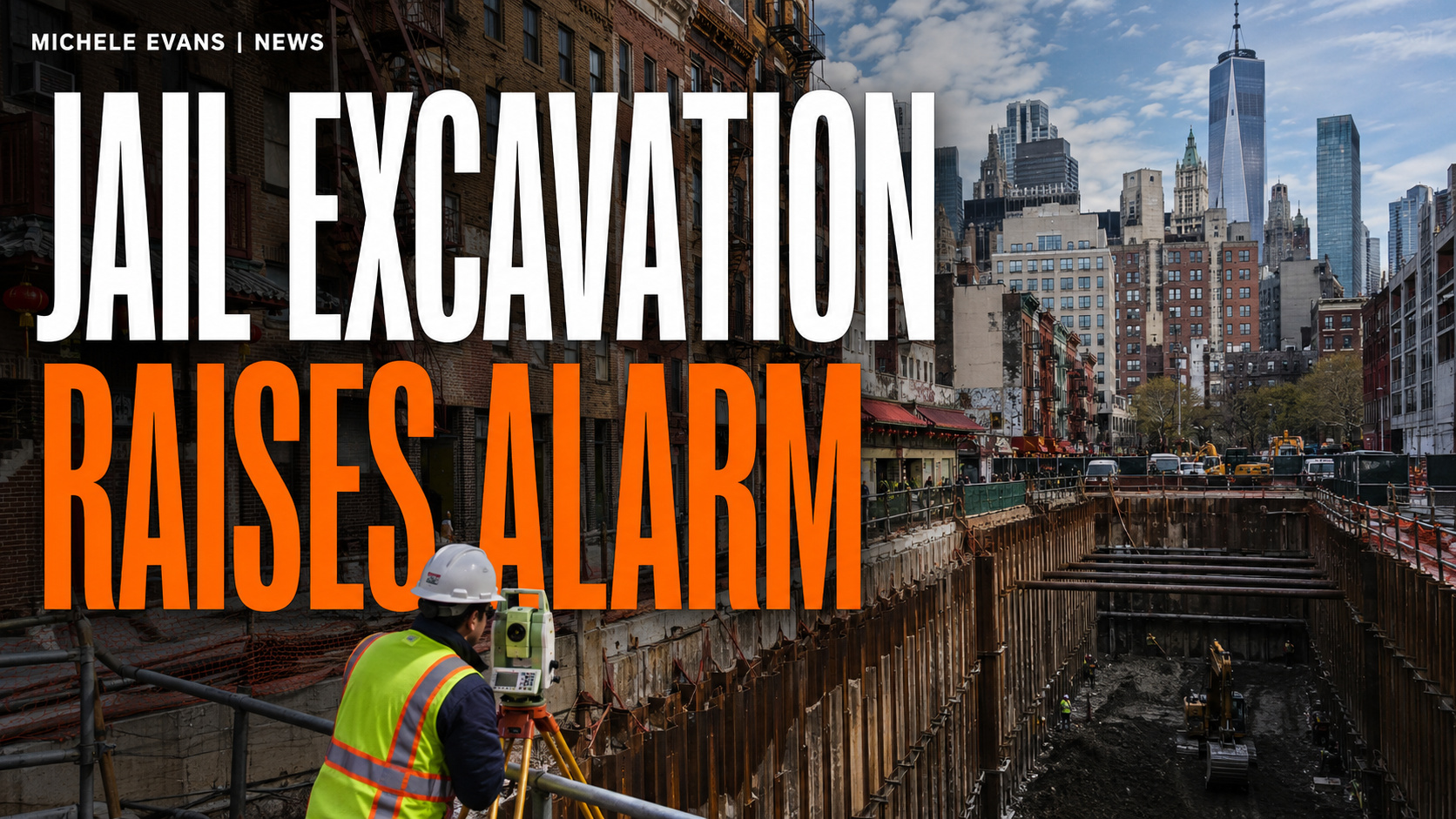
In an August 21 letter, 18 local leaders urged Mayor Zohran Mamdani’s administration to pause excavation at 125 White Street until the city provides stronger independent safeguards. The group says the site sits over the former Collect Pond, where groundwater and unstable soil have shaped Lower Manhattan for centuries.
The warning focuses on deep excavation and water control. Coalition members say lowering the water table could cause soil settlement and threaten nearby buildings supported by timber piles that depend on constant moisture.
Those structures include senior housing, historic buildings and dense residential blocks. The letter argues that damage could emerge gradually, through cracking, shifting foundations or weakened supports, long after the excavation begins.
The concerns are allegations and risk assessments, not findings that construction has already destabilized the neighborhood. City documents describe protective engineering measures, including secant-pile walls designed to limit groundwater movement and ground settlement.
A July city report also called groundwater management critical. That language matters because residents are being asked to trust a project that combines deep excavation, a difficult subsurface site and years of heavy construction.
The Manhattan facility is part of New York City’s borough-based jail plan, the centerpiece of the legally mandated effort to close Rikers Island. The broader program has been estimated at roughly $16 billion, with completion now projected for 2032.
Supporters say smaller borough jails can bring detained people closer to courts, lawyers and families. Chinatown opponents say reform cannot be built by transferring physical danger, dust, noise and years of disruption onto another community.
Residents have already complained about construction impacts. Environmental advocates have also raised questions about particulate pollution, while the coalition is demanding real-time monitoring, public reporting and an independent engineering review.
The city has not publicly accepted the coalition’s central claim that the excavation poses an unacceptable threat. The unanswered question is what evidence officials will release before the most consequential work proceeds, and what remedy residents would have if warning signs appear.
This is more than a neighborhood construction dispute. The credibility of the Rikers closure plan depends on whether the city can replace a failed jail complex without creating a new public-safety problem outside the jail walls.
Sources
Community Coalition Letter on Manhattan Jail Structural Risks
Leave a Reply