
By Michele Evans / NYweeklyRecord.com / Date: 8/14/2026
Category: Rikers Island / NYC Department of Correction / Civil Rights / Accountability
NEW YORK CITY, NY –
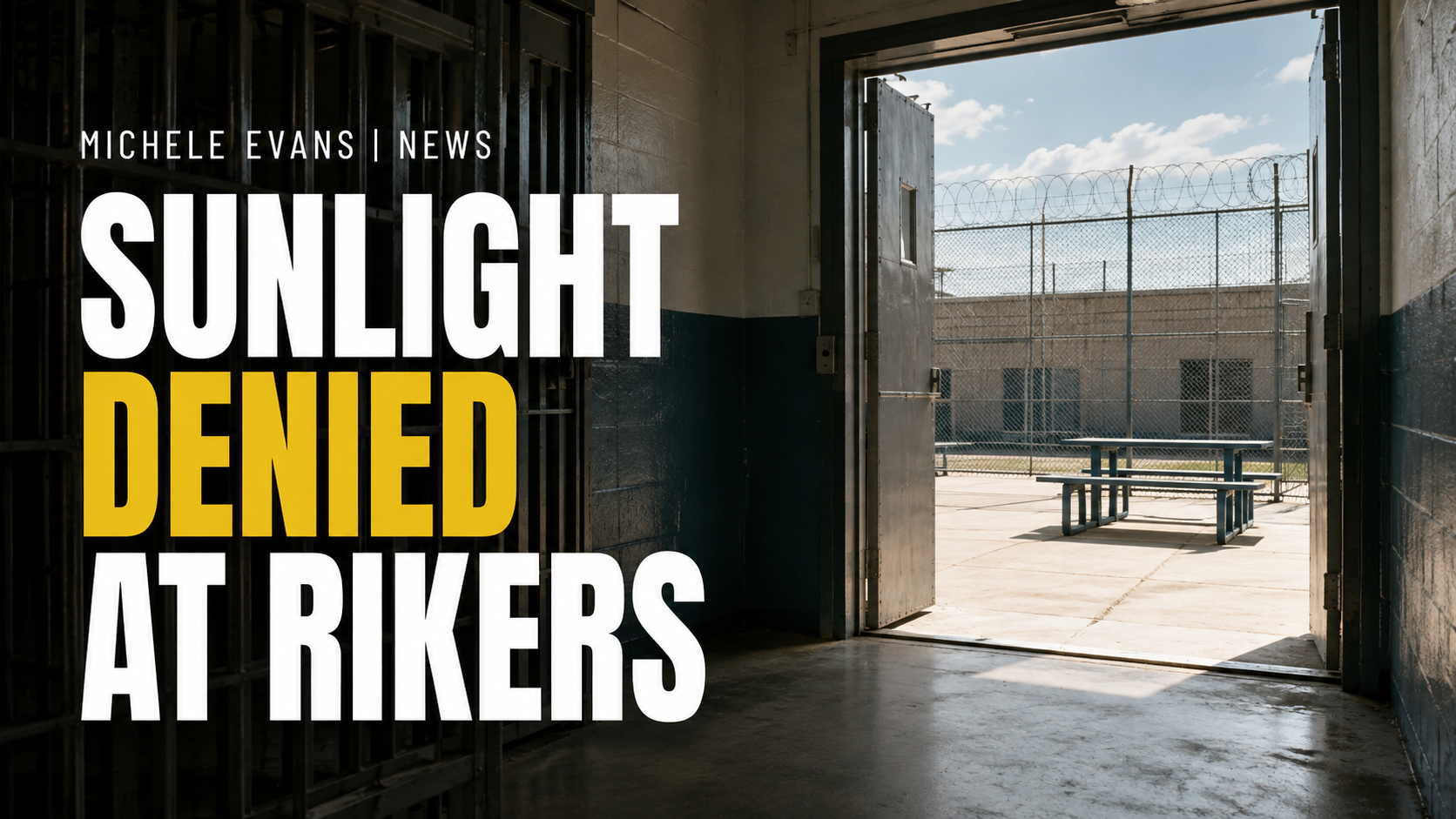
Two former pretrial detainees are accusing New York City jail officials of leaving them without meaningful outdoor recreation for weeks at Rikers Island, turning access to sunlight and fresh air into the latest test of whether the city can meet basic standards inside its troubled jail system.
The men filed separate proposed federal class actions against the city and the New York City Department of Correction. Their lawsuits allege that people held before trial were routinely kept from outdoor recreation for extended stretches. Those claims have not been proven in court, and no judge has ruled that the city violated the Constitution or any other law.
One named plaintiff, Peter Perna, says the problem was not an isolated missed hour. Grievance records cited in reporting on his case reportedly show that outdoor recreation was denied on 33 of 40 days between June 11 and July 20, 2025. His complaint alleges that the long confinement worsened his mental health and left him feeling cut off from the physical world outside the jail.
The Department of Correction attributed missed recreation periods to staffing shortages, according to news reports. That explanation raises its own accountability question. A shortage does not erase the effect on people in custody. It points directly at management, deployment and planning decisions inside a system that has repeatedly struggled to provide required services.
Attorney Callen Lowell, who represents the plaintiffs, argues that the failures reflect mismanagement rather than an unavoidable emergency. The lawsuits seek to move the dispute beyond individual grievances by asking federal judges to certify classes of similarly situated former detainees. Class certification is not automatic, and the city will have an opportunity to contest both the proposed classes and the underlying allegations.
New York City's Board of Correction sets minimum standards for jail conditions. Its recreation rule calls for adequate indoor and outdoor opportunities, says an outdoor area must provide direct access to sunlight and air, and provides for recreation periods of at least one hour. The standards say recreation should be available seven days a week outdoors, except when inclement weather requires indoor recreation.
Those rules matter because recreation in a jail is not a luxury program that can be casually canceled. Movement, sunlight and fresh air can affect physical and mental health, especially for people locked in housing units for long periods. Regular recreation also gives staff and detainees a predictable structure that can reduce tension in an already volatile environment.
The allegations carry added weight because the plaintiffs were pretrial detainees. People held before trial have not been convicted of the charges keeping them in custody. The government may detain them under court orders, but it remains responsible for humane conditions while their cases move through the criminal courts.
The lawsuits also put recordkeeping under scrutiny. If grievances, housing logs and recreation records show repeated cancellations, the city will have to explain who made those decisions, whether alternatives were considered and what supervisors did after complaints were filed. If the records do not support the allegations, the Department should be able to demonstrate that with a clear, complete accounting.
Staffing has long shaped what actually happens inside Rikers, from medical escorts and court production to programming and recreation. When basic services disappear because officers are unavailable, the consequence falls on people in custody while the system treats the shortage as an operational fact. The lawsuits challenge that pattern by asking whether an internal staffing problem can justify weeks without outdoor access.
The cases are at an early stage. The complaints present the former detainees' version of events, not final findings. The city may dispute the frequency of missed recreation, the reasons for each cancellation, whether the plaintiffs exhausted available grievance procedures and whether the alleged conditions support classwide relief.
What should not be disputed is the public's need for answers. How often was outdoor recreation canceled at each Rikers facility? Which posts went unfilled? Were housing areas offered make-up periods? Did supervisors notify the Board of Correction when access repeatedly failed? And what changes have been made since the period described in Perna's complaint?
Those questions reach beyond two lawsuits. New Yorkers fund the jail system and depend on it to keep people safe, produce them for court and treat them lawfully. When staffing shortages block basic recreation for days or weeks, the failure belongs on the public record. The city should have to show not only what happened, but how it will prevent the same deprivation from becoming routine.
Sources
NBC New York: Former Rikers detainees allege weeks without outdoor recreation
Leave a Reply