
By Michele Evans / NYweeklyRecord.com / Date: 8/8/2026
Category: Rikers Island / NYC Department of Correction / Criminal Justice / Government Accountability
NEW YORK CITY, NY –
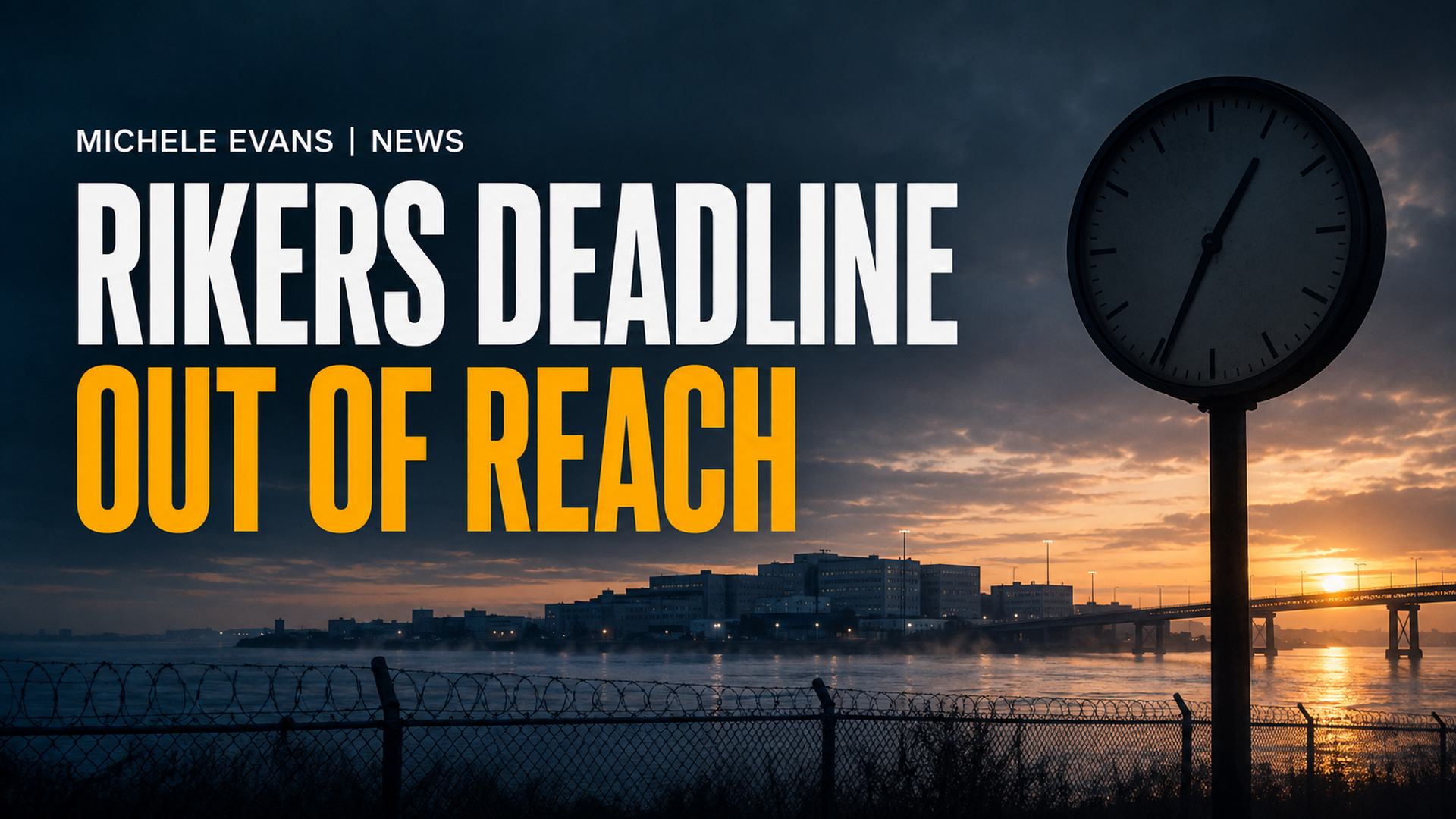
New York City’s legal deadline to close Rikers Island is roughly a year away. The replacement jails will not be ready, the jail population remains far above the system’s planned capacity, and elected leaders have not changed the law.
That collision is now the central fact of the city’s jail crisis. The 2027 deadline still commands closure, but current construction schedules reach years beyond it. The Brooklyn borough jail is projected for 2029. Bronx and Queens facilities are projected for 2031, and construction on the Queens site has not begun, according to reporting by the Queens Daily Eagle.
The Independent Rikers Commission responded this week with a new series of public service videos aimed at rebuilding support for the closure plan. The campaign does not solve the calendar problem. It tries to keep the public focused on why the city adopted the plan in the first place.
That matters because missed deadlines can become an excuse for drift. The city has known for years that closing Rikers requires more than building four borough facilities. It also requires reducing the number of people held before trial, expanding treatment and community-based alternatives, and making every part of the criminal legal system move cases more effectively.
Roughly 6,500 people are being held on Rikers, the Eagle reported. That is far above the population the borough-based system was designed to absorb. Most people in city jails are awaiting trial, not serving a sentence after conviction. Their cases may involve serious allegations, but the presumption of innocence remains the law.
Mayor Zohran Mamdani has said the 2027 deadline is practically impossible because the prior administration failed to meet the law’s requirements. That statement describes the inheritance. It does not answer who is accountable now for producing a measurable path forward.
The City Council and the administration face an unavoidable choice. They can preserve the deadline while publishing enforceable interim targets, or they can amend the law through a transparent public process. What they cannot responsibly do is allow the statute, the construction calendar and the jail population to exist as three separate realities.
The commission’s 2025 updated blueprint argued that the deadline should remain in law until the Council and the administration agree on a path that ensures continued progress. No such agreement has been announced. The absence of one leaves advocates, correction officers, incarcerated people and neighborhoods selected for new jails without a reliable timetable.
There has been movement. A 104-bed outposted therapeutic housing unit at Bellevue Hospital opened in April after sitting unused. Dana Kaplan was appointed the city’s close-Rikers czar. Those steps can improve care and coordination, but neither substitutes for a capacity plan that adds up.
The commission says Rikers undermines public safety, harms staff and incarcerated people, and costs the city more than $400,000 per incarcerated person each year. Those are the commission’s advocacy findings and should be treated as such. They still raise a basic accountability question: what does New York receive for one of the most expensive jail systems in the country?
The racial impact is equally stark. The commission reports that 85 percent of uniformed correction staff and 88 percent of people held in city jails are Black or Latino. The same communities are therefore heavily represented on both sides of the jail door, carrying the risks of violence, understaffing, trauma and institutional failure.
Supporters of closure argue that borough jails would place people closer to courts, families, lawyers and services. Critics question cost, neighborhood impacts and whether smaller facilities will be sufficient. Those disagreements are legitimate. They do not erase the need for accurate numbers, public milestones and officials willing to own the outcome.
The latest video campaign may shift public attention, but public relations cannot replace governance. New Yorkers need a single updated schedule showing when each facility will open, how many beds will be available, what population level is required, which programs will reduce detention safely, and what happens if agencies miss their targets.
They also need candor about construction risk. A projected completion date is not a guarantee. Procurement delays, site conditions, litigation, design changes and rising costs can push large public projects further back. The city should publish those risks before they become another surprise.
The law has not moved, but time has. Every month without an agreed plan narrows the city’s options and increases the chance of a last-minute political scramble. That would repeat the same failure the closure mandate was supposed to end: crisis management without durable accountability.
Closing Rikers was never only a real estate project. It was a promise to replace an isolated, violent jail complex with a safer and more accountable system. If the 2027 date cannot be met, officials must say exactly what can be met, by when, at what cost and under whose watch.
The unanswered question is no longer whether the original calendar is slipping. It is whether city leaders will turn that admission into a public, enforceable recovery plan or allow an impossible deadline to become a permanent excuse.
Leave a Reply