
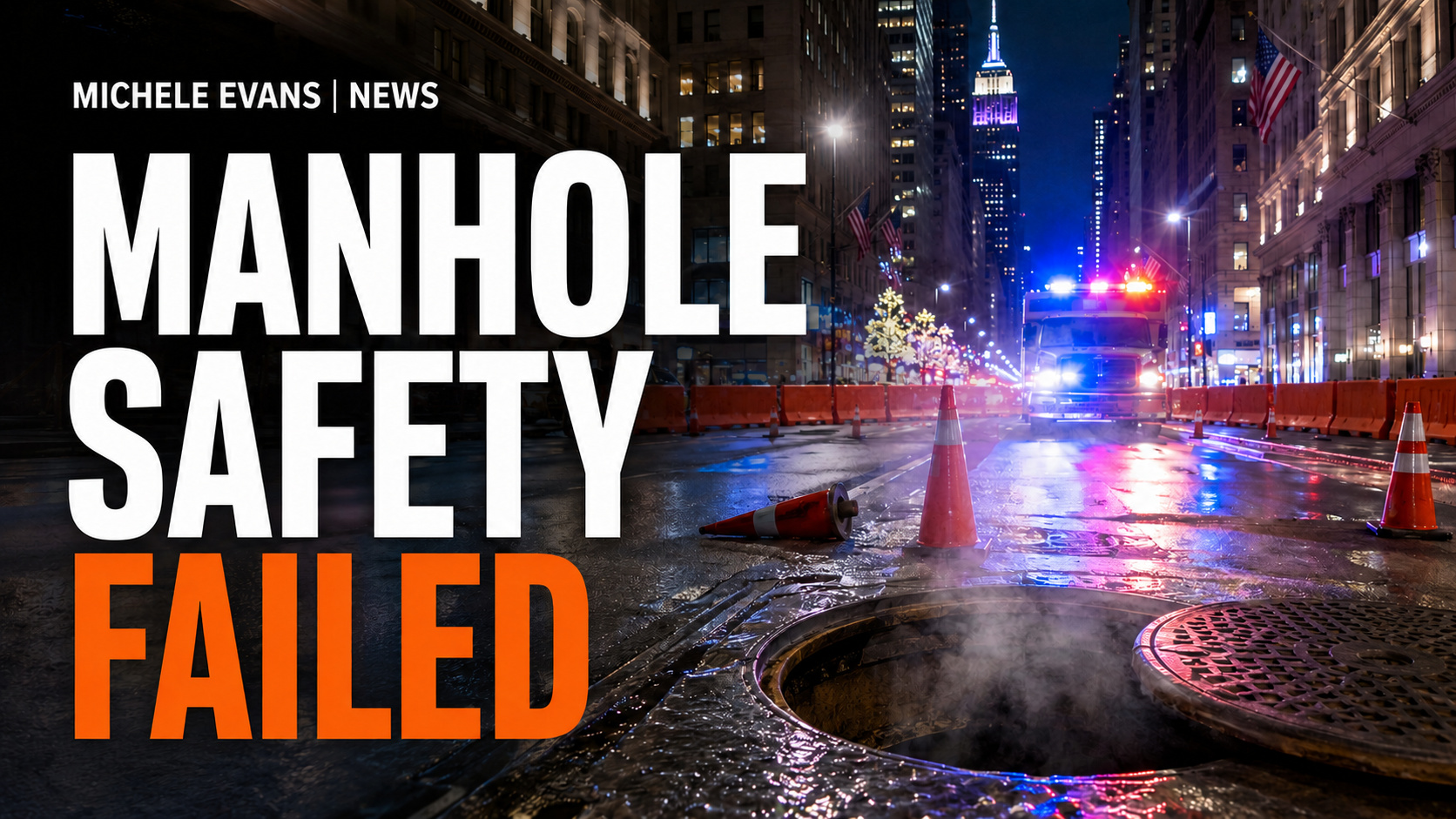
By Michele Evans / NYweeklyRecord.com / Date: 7/18/2026
Category: Public Safety / Infrastructure Accountability / Courts
NEW YORK CITY, NY – A 56-year-old grandmother stepped out of a vehicle on Fifth Avenue and disappeared into an open, superheated utility vault. Two months later, Donike Gocaj’s family is asking a court to answer the question New Yorkers should never have to ask: How could a deadly hole in one of the busiest parts of Manhattan be left unguarded?
Gocaj’s son, Armando Gocaj, and her domestic partner, Jashar “Jack” Kameraj filed a wrongful-death lawsuit against Consolidated Edison this week. The complaint alleges the utility knew its covers could become dislodged, failed to properly secure the opening near East 52nd Street and Fifth Avenue, and left the site without barricades, cones, warning signs or another barrier on May 18.
Those are allegations, not findings. Con Edison has not been found liable. The utility expressed condolences to Gocaj’s family and said it could not comment on the pending claims. In May, a company spokesperson said a multi-axle truck passed over the cover and dislodged it roughly 12 minutes before Gocaj parked nearby.
That explanation does not close the accountability gap. It sharpens it. If heavy traffic can move a cover over a steam vault, the public deserves to know what locking systems, inspections, alerts and emergency safeguards were in place, whether earlier complaints were received, and why no immediate warning protected pedestrians.
According to reporting based on the civil complaint and the city medical examiner, Gocaj fell about 10 feet and died from scald burns, heat inhalation and blunt-force trauma. Kameraj tried to save her and is also seeking damages for the injuries and anguish he says he suffered while witnessing the fall.
A wrongful-death case allows a representative of a deceased person’s estate to pursue damages tied to the death. The plaintiffs still must prove their claims, and Con Edison will have the opportunity to answer the complaint, challenge the allegations and present evidence. The filing begins that process. It does not decide it.
But civil procedure should not bury the public-safety question. This was not a hidden industrial site. It was Midtown Manhattan. When critical utility infrastructure sits beneath sidewalks and streets used by millions, the standard cannot be that a rare mechanical failure becomes visible only after someone is killed.
Gocaj’s family says it wants prevention as well as accountability. New Yorkers deserve a public accounting of whether this vault met applicable safety requirements, what the utility knew before the fall, how quickly it can detect a displaced cover, and what changes will prevent another family from living through the same horror.
Sources
Gothamist: Family sues Con Edison over woman’s fatal fall into Midtown manhole
New York Post: Family files wrongful-death suit against Con Edison
Leave a Reply