
NEW YORK CITY, NY –
Nearly $1 million meant to support New York students was allegedly diverted through two separate fraud schemes, according to indictments announced by Manhattan District Attorney Alvin Bragg and State Comptroller Thomas DiNapoli.
The cases are allegations, not convictions. All three defendants are presumed innocent unless proven guilty in court. But the public-interest stakes are already clear: the money at issue was not an abstract budget line. Prosecutors say it was intended for college stipends and a Harlem charter-school program serving children.
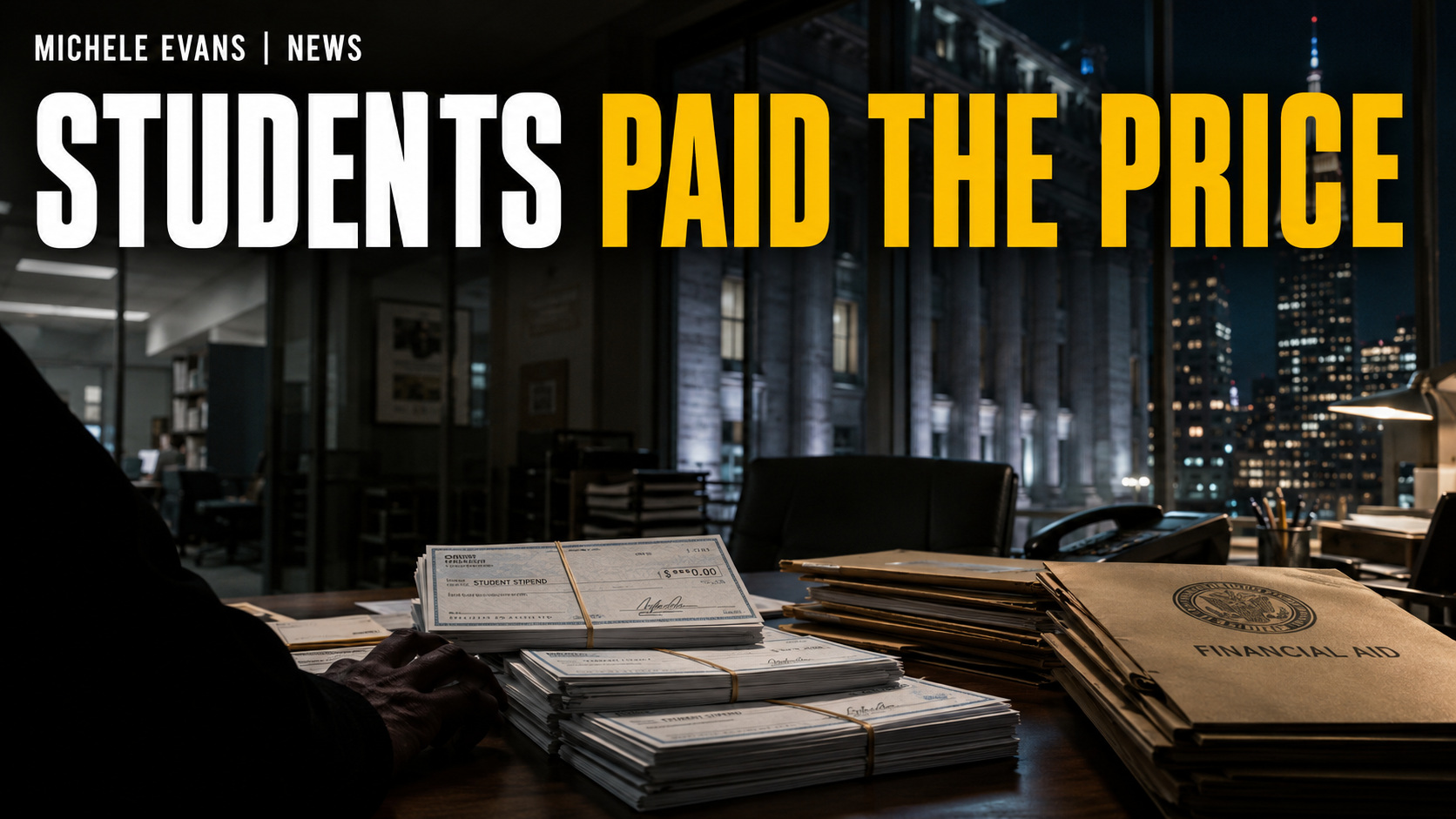
In the larger case, prosecutors allege that Cadelie Neat, a former John Jay College of Criminal Justice bookkeeper, stole more than $700,000 from the APPLE Corps program between December 2018 and April 2026. The program supports students preparing for careers in law enforcement and related public service.
According to the Manhattan District Attorney’s Office, Neat allegedly generated more than 260 fraudulent checks, including checks issued in the names of real students and fictitious people, then deposited the money into accounts she controlled. Prosecutors allege the funds were used for personal expenses, including travel and home repairs.
Neat pleaded not guilty to charges including grand larceny and identity theft, according to published reporting. The prosecution must prove every element beyond a reasonable doubt.
A second indictment accuses Andrea Williams and Cheryl Carr of creating what prosecutors describe as a fake charter school in order to intercept more than $288,000 intended for Harlem Children’s Zone Promise Academy. Both women also pleaded not guilty, according to reporting on the cases.
These are separate prosecutions with separate facts. They should not be collapsed into one assumption of guilt. What connects them is the public purpose of the money prosecutors say was targeted.
Student-support funds exist because education is already expensive, unequal, and difficult to navigate. A stipend can cover transportation, books, food, or the hours a student cannot spend at another job. When that money disappears, the harm does not stay inside an accounting ledger. It lands on students who were told help was available.
The allegations also raise oversight questions for John Jay College, the City University of New York system, state payment controls, and every agency responsible for protecting public education dollars. How could more than 260 allegedly fraudulent checks move through a program over years? What reconciliation procedures existed? Who reviewed unusual payees, duplicate patterns, or deposits? When did the first warning appear?
Those questions do not decide criminal guilt. They decide whether public institutions learn before the next alleged scheme reaches another classroom.
Bragg said the alleged crimes targeted funds intended to support students from grade school through college. DiNapoli said his office would continue working with law enforcement to protect public money. Those statements are appropriate. They are also only the beginning.
Accountability cannot end with indictments. The public deserves a clear accounting of how controls failed, whether money can be recovered, whether affected students lost promised support, and what safeguards have changed.
The defendants are entitled to due process. The students are entitled to something too: a system that treats money earmarked for their futures as a trust, not an easy target.
Sources
Manhattan District Attorney: Indictments in Frauds Totaling Nearly $1 Million
New York Post: John Jay Bookkeeper Accused of Stealing Student Funds
Leave a Reply