
By Michele Evans
New York City, New York
Date: 7/9/2026
Category: NYPD / Sexual Assault Allegations / Workplace Retaliation / Police Accountability / Bronx Courts / Public Safety
NEW YORK CITY, NY – When a police officer reports that a superior officer sexually assaulted her inside a precinct, the first public question should not be whether the department can survive the embarrassment. It should be whether the officer was protected.
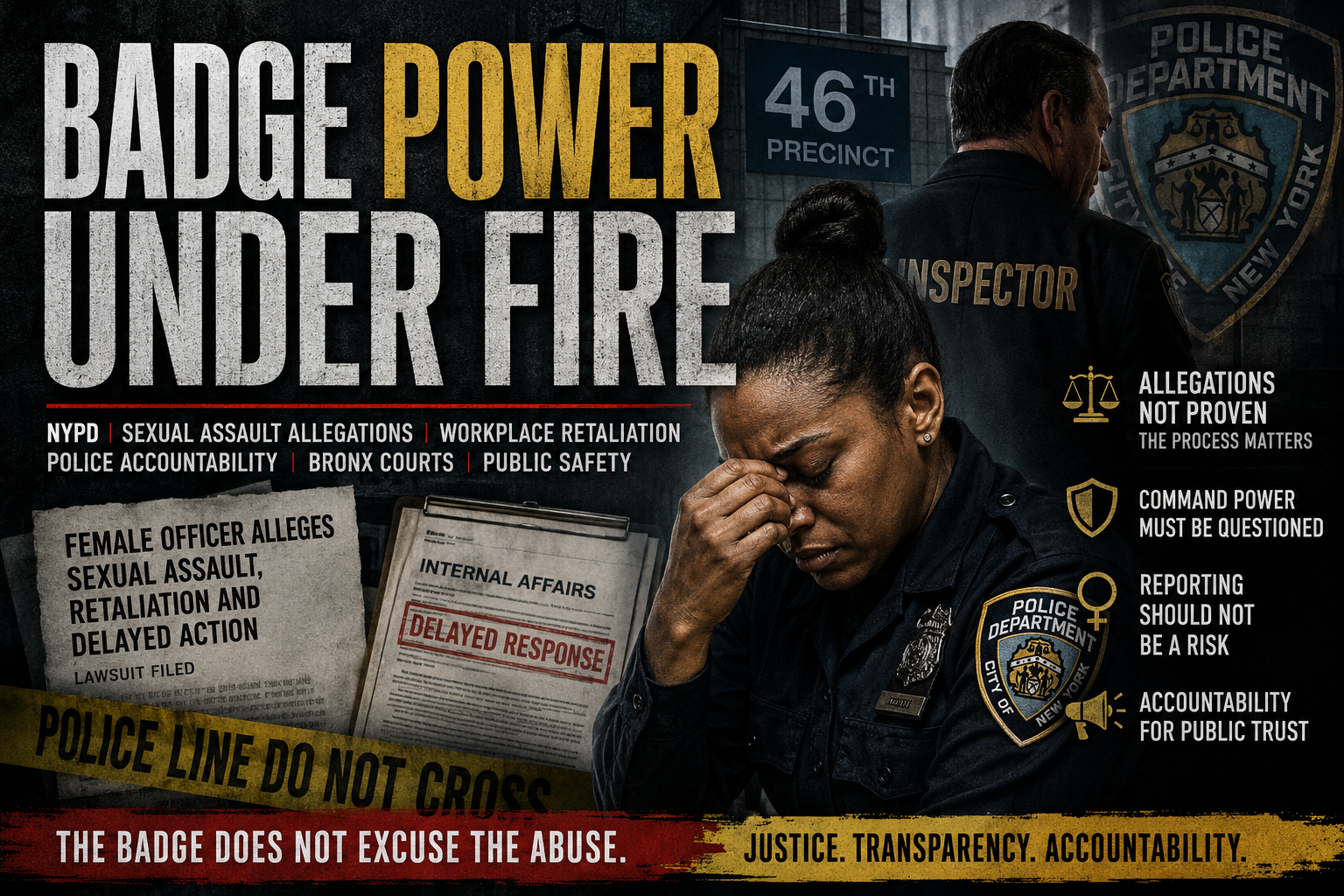
People reported July 5 that NYPD Inspector Jeremy Scheublin has been suspended after being sued by a fellow officer who accused him of sexually assaulting her at the 46th Precinct in the Bronx. The alleged incident happened on January 1, 2025, while both were on duty. The officer, identified in reporting by initials, is a Black woman and mother.
The allegations are disturbing. They are also allegations in a lawsuit, not findings of guilt. Scheublin denies the claims through counsel and says he intends to address the accusations in the proper forum.
That distinction matters. So does the timeline.
People reported that an NYPD spokesperson confirmed Scheublin’s suspension on July 4. The New York Post reported that internal police documents showed he was removed from his position on June 30, months after the lawsuit became public and more than a year after the officer allegedly reported the incident to Internal Affairs.
According to the reporting, the officer alleges Scheublin grabbed her, tried to kiss her, made racially charged sexual comments, and was armed during the encounter. She says she fought him off and reported the incident immediately. The lawsuit also alleges retaliation afterward, including shift changes and intimidation.
That is the public-interest core of this story. Not only what allegedly happened in one office. Not only whether one inspector is ultimately disciplined, retires, or clears his name. The larger question is how an armed public agency handles allegations when the accused person has command power and the accuser still has to work inside the same system.
The NYPD is not an ordinary workplace. It carries guns. It makes arrests. It controls scenes. It asks the public to trust its internal systems, its discipline process, and its chain of command. That is why a sexual-assault allegation inside a precinct cannot be treated like a private personnel dispute.
If the officer’s claims are proven, the case raises serious questions about protection, retaliation, and whether reporting misconduct inside the department can make a victim more vulnerable. If the claims are not proven, the public still deserves a transparent process that explains what was investigated, when action was taken, and why the command timeline unfolded the way it did.
The Post reported that the Bronx District Attorney’s office did not respond to a request for comment, and the NYPD did not respond to that outlet’s email about the suspension. People reported that Scheublin’s attorney said he retired to avoid being a distraction and to address what he called hurtful and false allegations.
The words are competing. The process is what matters now.
Victims inside law-enforcement workplaces face a unique trap. Reporting can mean challenging not just one person but an institution that controls assignments, credibility, promotion, and daily safety. That is why retaliation allegations deserve as much scrutiny as the underlying assault allegation.
For now, the confirmed facts are limited. Scheublin has been suspended. A lawsuit is pending. The officer’s allegations have been reported by multiple outlets. Scheublin denies them. The NYPD’s handling of the timeline remains a central unanswered issue.
New York should not need a lawsuit, a headline, or a retirement filing before command power is meaningfully questioned. The public deserves a police department where reporting misconduct does not become another risk.
Michele Evans is an independent journalist, author, and former ESPN technical producer whose work has appeared in The New York Times.
Michele got her start in 2001 covering the NBA and NFL. She now covers New York City courts, criminal-justice procedure, NYPD, FDNY, domestic-violence systems, media accountability, public safety, advocacy efforts, and New York civic life through courthouse observation, public records, legal analysis, and lived-experience reporting.
Read more independent journalism by Michele Evans.
Follow Michele Evans on Facebook and Substack for new reporting, analysis, and updates.
Leave a Reply